
Emma Sky
28 Apr 2026
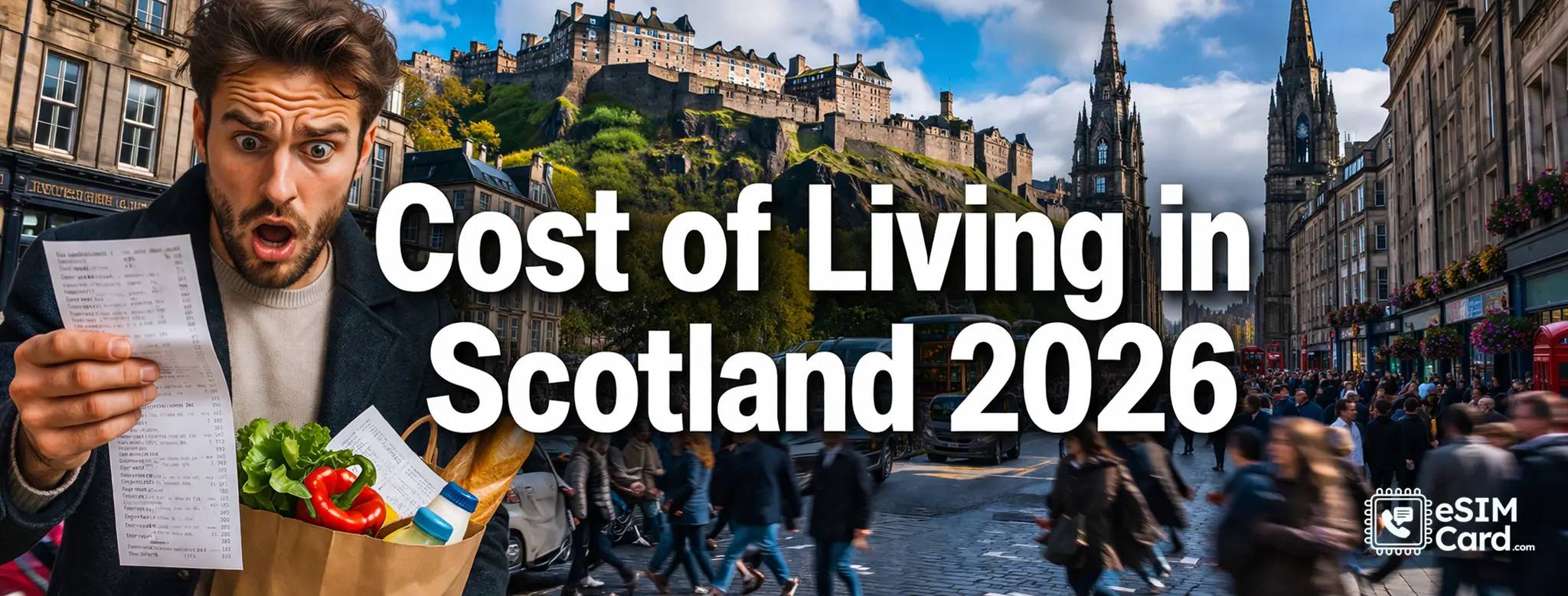
Cost of Living in Scotland 2026: Rent, Council Tax & Expat Budgets
The average cost of living in Scotland ranges between £1,400 and £2,200 per month. However, the amount is not specific to everybody; it can vary depending on your lifestyle, housing, and location. Scotland is a beautiful country with dramatic landscapes, world-class universities, free NHS prescriptions, and vibrant city life.
The country’s lifestyle attracts thousands of expats and digital nomads every year. Compared to most of Western European countries, Scotland is cheaper to live in for an international. However, before moving to the country, there are some hidden expenses you should be aware of, such as Scottish Income Tax rates and winter heating costs.
In this guide, I will discuss the cost of living in Scotland in 2026 for expats and nomads. I will explain the costs of renting, transportation, taxes, and groceries to help you create sample monthly budgets.
4.9

Highly Rated
Based on 500,000+ customer reviews

Trusted worldwide
Over 1 million travelers across the globe have trusted us

Travel Friendly
No swaps, global connectivity ensured
Is Scotland Cheaper Than England?
Yes, Scotland is cheaper than England. International travellers admire Scotland for the housing costs compared to those in Southern England. Rental housing costs in Scottish cities like Glasgow and Aberdeen are significantly lower.
On average, a single bedroom flat in Glasgow costs £1,000/month, while £1,800–£2,500 is charged for the same flat in London. Well, housing is cheaper, but the Scottish income Tax and the winter heating system can cost you more than you expect.
Parliament sets the Scottish Income Tax system, which is completely different from England's. According to Scotland 2026 tax details, the country has a starter rate of 19% a basic rate of 20%.
Winter heating can also offset your savings. The winter heating system in Edinburgh and Glasgow can increase your energy bills due to poor insulation.
Rent & Housing: Edinburgh vs Glasgow vs Rural
Edinburgh (The Premium)
Edinburgh is considered the most expensive city to live in. Single bedroom flats in areas like New Town, Stockbridge, and Bruntsfield can cost around £1,200 to £1,600+ per month.
Similarly, A two-bedroom flat in Edinburgh generally costs around £1,600–£2,200/month for the exapt. If you are a student, Leith or Gorgie are the perfect areas for you to live in, offering affordable rent.
Glasgow (The Middle Ground)
Compared to Edinburgh, you can expect moderate rents in Glasgow. Shawlands or Dennistoun costs roughly £900- £1,200 per month for a one-bedroom flat. Glasgow has a large tenement housing stock, so that you can find low rental costs.
However, before signing any lease, check the EPC rating. Rightmove and Citylets are the ideal platforms to find rental information across Scotland.
The Highlands/Rural
Highlands and rural areas like Fife or the Borders are the best areas for remote workers or retirees to live. At these places, the rent is £600-£800/month for a one-bedroom. You can save money living in this area, but the fuel costs and heating an older rural property can be expensive.
Mandatory Hidden Costs: Council Tax & Energy
The following are the mandatory hidden costs you must know to make the perfect estimate of the costs of living in Scotland.
Council Tax in Scotland
Council Tax in Scotland is the local tax paid to the council to fund services such as waste collection, roads, and local schools. For property taxation, Scotland has a unique band system from A (lowest) to H (highest).
- Band A (Up to £27,000): It is the lowest rate, costing over £1,100–£1,300 annually.
- Band B (£27,001-£35,000): It costs roughly £1,300–£1,500+.
- Band C (£35,001 - £45,000): Mid-lower range, roughly £1,500–£1,700+.
- Band D (£45,001 - £58,000): The base band used for setting ratios, often £1,700–£1,900+.
- Band E (£58,001 - £80,000): Often exceeding £2,000–£2,300.
- Band F (£80,001 - £106,000): Higher band, typically £2,500–£2,800+.
- Band G (£106,001 - £212,000): Often costs £3,000–£3,500+.
- Band H (Over £212,000): Highest rate, often exceeding £3,700–£4,500+.
Unlike England, the Scottish council tax includes the water and sewerage charges, which is considered a saving.
Note: If you are a full-time student in Scotland, you can get the full Council Tax exemption.
Energy Bills and the EPC Warning
If you are planning to buy an older rental house in Scotland, be aware that the houses are poorly insulated. In many houses, you will need an appropriate heating system, and here the EPC (Energy Performance Certificate) comes into play.
The EPC rating is critical; every rental property must have one, rated from A to G. It is recommended to avoid renting a flat rated F or G. Properties with such a rating cost around £200–£350/month on energy alone.
Find the properties rated C or above if energy efficiency matters to your budget. Depending on usage and bills, the average energy bill for a well-rated one-bedroom flat in Scotland ranges from £80 to £130/month.
Transportation & Commuting
Scotland has reasonable public transport expenses in the major cities. Edinburgh has the Lothian Buses system, which covers the city's routes. A monthly bus pass for the expats in the city costs around £58. You can also travel through the city on the Edinburgh tram line.
Similar to Edinburgh, Glasgow has a well-structured transportation system. The city has a Subway called "Clockwork Orange" by locals. A monthly Glasgow travel pass costs approximately £55–£70.
ScotRail is the major national rail service in Scotland, connecting many cities and towns. The train from Edinburgh to Glasgow costs roughly £15–£30 return, depending on timing and whether you book in advance.
The unusual thing that you can experience in Scotland is free bus travel. Everyone under 22 years old can use the Young Persons Free Bus Pass scheme to travel for free across Scotland's cities. The service is excellent for students or young adults, saving hundreds of pounds a year.
Groceries & Supermarkets
A monthly grocery budget in Scotland varies depending on your dining and eating habits and the number of people in your household. Groceries for a single person in the country roughly cost £200–£300/month.
The major options are UK supermarkets such as Tesco, Sainsbury's, Asda, Aldi, and Lidl. But to save more on your groceries, Scotland's local chains are the ideal option. Co-op stores are common in smaller towns and the Highlands.
Stockbridge Market of Edinburgh and Glasgow's Barras Market are the perfect places to buy fresh local products. On average, eating out in Scotland costs £12–£18 for a meal.
Getting Connected Upon Arrival
Connectivity charges in Scotland are mandatory to consider for international students and expats. If you are thinking of relying on the local SIM, you will need a good amount to buy a SIM card, and the UK broadband typically takes 2–4 weeks to install.
Local networks like BT and Virgin Media have long processing times, which can disrupt your work routine. Similarly, using the data roaming packages for Scotland will cost you thousands of dollars a month.
The simplest and most cost-effective solution is to use an eSIM card. eSIM, or embedded SIM, eliminates the need for a physical SIM and ensures effortless connectivity for travelers.
I recommend eSIMCard as the best mobile data provider for international travelers. You can buy a UK eSIM for instant mobile data in Scotland. The SIM will allow data tethering with other devices without any data roaming charges. Once you scan the eSIM QR code, it instantly activates on your device and keeps you connected across the country.
Sample Monthly Budgets (2026)
Here is the estimated expenses comparison of a student in Glasgow vs. a professional in Edinburgh.
Conclusion
The average cost of living in Scotland ranges between £1,400 and £2,200 per month. The amount might be low or high depending on individual lifestyle, housing, location, utility bills, and energy bills.
Compared to England, rental houses in Scotland are more cost-effective. But despite housing, some hidden expenses that expats often overlook are taxes, energy and connectivity bills. In this guide, I have discussed the estimated cost of living in Scotland for expats and students to make a precise decision.
FAQs
Is healthcare free in Scotland?
Yes, healthcare in Scotland is free. But the service is available to residents through the National Health Service. The NHS includes hospital treatments, emergency care, and free prescriptions.
What is a good salary to live comfortably in Scotland?
Approximately £30,000–£ 35,000 is an ideal amount to live comfortably in Scotland as a single person. But couples without children require £45,000–£ 55,000 or more.
What is the cost of living in Scotland for a family of 4?
The estimated monthly cost of living in Scotland for a family of four is approximately £2,500–£3,500+ without housing.