
Emma Sky
31 Jul 2026
Mexico Digital Nomad Visa 2026: Requirements and How to Apply
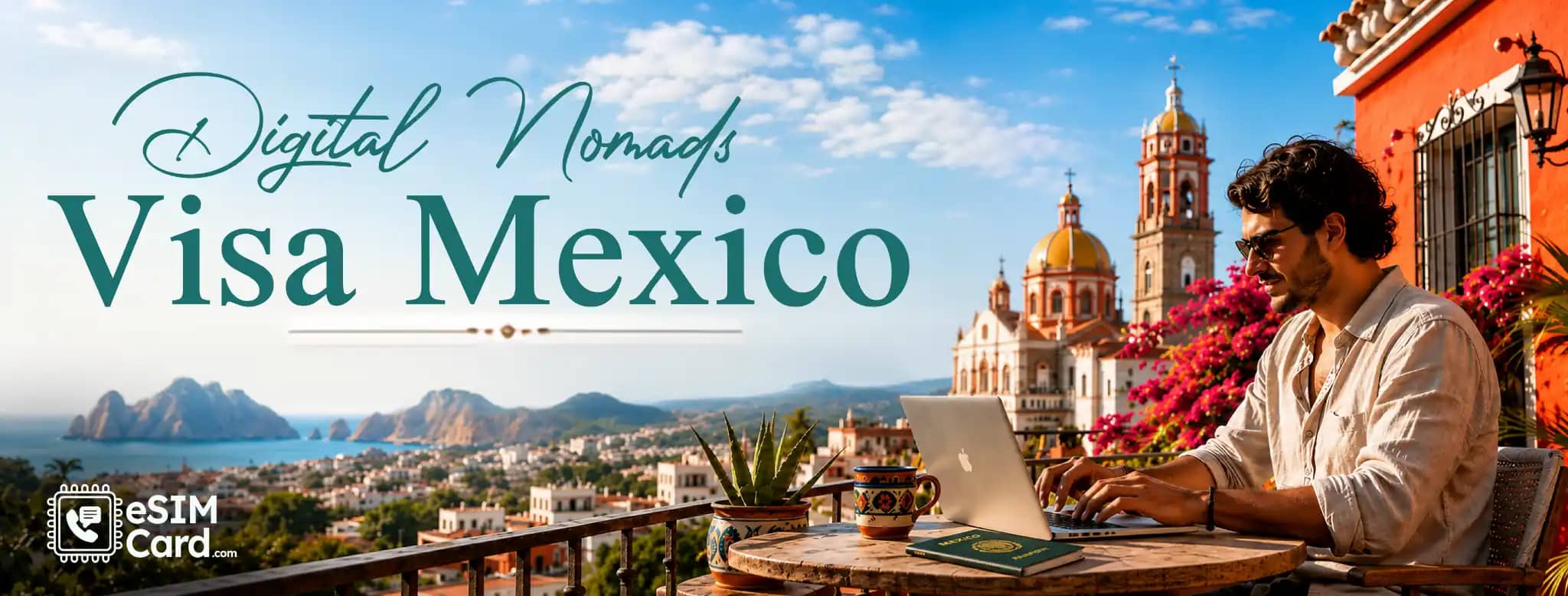
Mexico’s digital nomad visa has one small problem. It doesn’t officially exist. That doesn’t mean remote workers can’t live in Mexico long term.
Most eligible employees, freelancers and online business owners apply for Mexico’s Temporary Resident Visa instead.
This route usually requires proof of economic solvency. You’ll need to show enough regular income, savings or investments to support yourself without taking local employment.
Here’s where people get caught out. Mexico’s consulates don’t all publish the same financial figures. The required income, bank balance and statement period can depend on the consulate handling your application.
You must also complete a second immigration step after entering Mexico. The visa inside your passport isn’t your final residence document.
Mexico doesn’t currently offer an official digital nomad visa. Remote workers usually use the Temporary Resident Visa, which can support stays longer than 180 days and may be renewed for up to four years.
If you're still comparing destinations, our guide to the best digital nomad visa countries explains which countries officially welcome remote workers and how their visa options compare with Mexico.
In this guide, you’ll learn about Mexico’s remote-worker visa options, financial requirements, application steps, costs and residence-card process.
4.9

Highly Rated
Based on 500,000+ customer reviews

Trusted worldwide
Over 1 million travelers across the globe have trusted us

Travel Friendly
No swaps, global connectivity ensured
Does Mexico Have a Digital Nomad Visa?
No, Mexico hasn’t introduced a visa officially named the “digital nomad visa.”
People use that term because the Temporary Resident Visa can suit remote workers with foreign income. It’s available to several applicant types, not just digital nomads.
The visa is commonly used by:
- Remote employees working for overseas companies
- Freelancers serving foreign clients
- Online business owners
- Consultants and independent contractors
- Retirees and financially self-sufficient applicants
- Partners and dependants who qualify through family links
Temporary residence is designed for foreigners who plan to remain in Mexico for more than 180 days but less than four years.
What visa do remote workers use in Mexico?
Remote workers generally apply for a Temporary Resident Visa through economic solvency.
Economic solvency means proving that you can support yourself through qualifying income, savings or investments. The exact evidence depends on your consulate.
Your employment situation also matters. Working online for a foreign company isn’t treated exactly like accepting paid employment from a Mexican company.
A Temporary Resident Visa doesn’t automatically permit you to take every type of local job.
Mexico Digital Nomad Visa Requirements
Mexico digital nomad visa requirements vary by consulate, but most applicants need a similar core set of documents.
Expect to prepare:
- A valid passport
- A completed visa application form
- A recent passport photograph
- Proof of legal residence in the country where you apply, when relevant
- Bank statements or investment records
- Evidence of employment, pension or recurring foreign income
- An employer letter, where requested
- Proof of your consular appointment
- Payment for the visa application
- Marriage or birth records for dependants, where relevant
Some offices request original bank statements. Others may accept statements printed online if your bank stamps or signs them.
Don’t guess. Read the instructions published by the Mexican consulate serving your legal address. One missing stamp can turn a tidy application into a wasted appointment.
Requirements for remote employees
Remote employees should prepare more than basic payslips.
A strong employer letter may confirm:
- Your position
- How long you’ve worked there
- Your monthly or annual salary
- Confirmation that you are permitted to work remotely
- That your employer is based outside Mexico
- Confirmation that your salary will continue while you live in Mexico
San Diego’s 2026 guidance asks employed applicants for a signed company letter. It must state that the employer agrees to the applicant living in Mexico while working remotely.
Ask for that letter early. HR departments rarely move as fast as visa applicants expect.
Requirements for freelancers and business owners
Freelancers don’t always have neat monthly payslips. That doesn’t automatically make them ineligible.
You may support your application with client contracts, invoices, business bank statements, tax returns and company registration documents.
Payment-platform records may also help. Still, they shouldn’t replace the bank evidence requested by your consulate unless the consulate confirms otherwise.
Irregular deposits need context. A short cover letter can explain your work, clients and payment schedule.
Can family members apply with you?
Your spouse, children or other eligible relatives may be able to join you.
The application may require marriage certificates, birth certificates and extra financial evidence. Documents issued outside Mexico may need an apostille, legalization or certified Spanish translation.
Boston’s 2026 visa guidance states that the main applicant may need an extra $1,500 in after-tax income for each dependant. That figure applies to its own process and shouldn’t be treated as a national rule.
What Is the Income Requirement for Mexico’s Digital Nomad Visa?
There is no single Mexico digital nomad visa income requirement that applies at every embassy or consulate. That’s the detail many guides bury.
Consulates may calculate economic solvency using current exchange rates and Mexican minimum-wage measures. As a result, thresholds can change each year and differ between locations.
Some offices ask for six months of employment income. Savings routes commonly require twelve months of statements.
Here are a few 2026 examples:
Because financial requirements vary by consulate, always verify the latest eligibility criteria through the Mexican visa information portal before submitting your application.
San Diego’s official 2026 document lists $4,510 in monthly employment or pension income for the previous six months. Its savings route requires an average balance of $75,950 over twelve months.
Las Vegas lists a $56 application fee and a twelve-month investment or bank-statement route.
Leamington’s June 2026 guidance lists C$6,461 in monthly tax-free income or C$108,894 in average investments or savings. Those differences aren’t minor. They can decide where, when and whether you qualify.
How to find your exact financial threshold
Start with the Mexican consulate that serves your legal place of residence.
Open its Temporary Resident Visa page and check:
- The page’s update date
- Monthly income requirements
- Savings or investment requirements
- The required statement period
- Whether income must be after tax
- Accepted currencies
- Bank-stamp rules
- Dependant additions
- Payment methods
- Appointment instructions
Save a copy of the requirements before your appointment. Requirements change, financial thresholds are updated, and old blog posts may remain online for years.
How to Apply for a Mexico Digital Nomad Visa
The process starts outside Mexico in most standard economic-solvency cases.
Choose the correct Mexican consulate
Find the embassy or consulate responsible for your legal address. Some offices only accept people who live within their assigned jurisdiction.
Applying at a nearby office simply because it has earlier appointments may not work.
Review its local instructions
Check the financial threshold, statement period and document format.
Look closely at photograph sizes too. They aren’t always identical between consulates.
Book an appointment
Appointment systems and availability vary. Some consulates release slots in batches. Others accept requests by email or through an online booking platform.
Don’t buy nonrefundable flights based only on an appointment request.
Prepare original documents and copies
Check whether your consulate wants bank-stamped originals, signed employer letters or printed statements.
Make sure names match your passport. Small differences can trigger questions.
Attend your interview
A consular officer may ask about your work, income, planned address and reason for living in Mexico.
Answer plainly. Don’t describe foreign remote work as local Mexican employment unless that’s actually your situation.
Pay the visa fee
Several Mexican consulates listed a $56 visa application fee for 2026. Payment methods vary, and the fee is normally nonrefundable.
Approval isn’t guaranteed merely because you submitted the required documents.
Enter Mexico using the visa
Check the visa sticker before leaving the consulate. Confirm your name, passport number and validity dates. Ask immediately if something looks wrong.
Exchange it for a Temporary Resident Card
After entering Mexico, you must complete the canje process with the Instituto Nacional de Migración, known as INM.
Canje means exchange. You’re exchanging the consular visa for the physical Temporary Resident Card.
This process generally needs to begin within 30 days of entering Mexico. Official Mexican consular guidance describes the visa as single-entry and states that it must be exchanged within that period.
Visa Sticker vs Temporary Resident Card
The visa sticker and the Temporary Resident Card aren’t the same document.
Honestly, many people get this wrong.
Receiving the visa in your passport doesn’t finish the process. You still need to visit INM and obtain the residence card.
Temporary residence may generally continue for up to four years, subject to renewal and continued eligibility.
Avoid booking international travel while your card is being processed. Ask INM whether you need special permission to leave Mexico.
How Much Does the Mexico Digital Nomad Visa Cost?
The consular fee is only one part of the cost. You may also pay for document certification, photographs, translations, apostilles, transport and the Temporary Resident Card.
INM maintains an official immigration-procedures portal covering requirements, payments and residence-related processes. Use it to check current card fees before applying.
Never combine the consular visa fee with the residence-card fee. They are paid at different stages.
Can You Work Remotely in Mexico Legally?
You may be able to work remotely for a foreign company or foreign clients while holding temporary residence.
But don’t treat this as blanket permission for every paid activity.
Taking a job with a Mexican employer may require separate authorization. Work involving Mexican clients can also raise immigration and tax questions.
Remote employees should discuss the move with their employer before applying. A company may need to review payroll, tax exposure, data protection and workplace insurance.
Ask your employer about:
- Written permission to work from Mexico
- Payroll and withholding
- Corporate tax exposure
- Cybersecurity and data-access rules
- Insurance coverage
- Working hours and time zones
Freelancers should check how Mexican-source work may affect their status. An immigration lawyer can review complex client arrangements.
Do Digital Nomads Pay Tax in Mexico?
A Mexican residence card and Mexican tax residence aren’t automatically the same thing. Immigration rules decide your right to stay. Tax rules examine your home, income, time in Mexico and personal ties.
The often-quoted 183-day rule doesn’t answer every case. Authorities may also consider where you maintain a permanent home and where your closest economic or personal interests sit.
US citizens generally keep federal filing obligations while living overseas. Relief may be available, but eligibility depends on personal circumstances.
Tax rules change, and treaties can alter the result. Get cross-border advice before assuming your foreign income stays outside Mexico’s tax system.
What Happens During Your First 30 Days in Mexico?
Your first month isn’t only about finding a desk and testing café Wi-Fi.
The canje deadline needs attention. Start the INM process soon after arrival. Prepare your address, passport, visa, entry record, application forms and payment evidence.
Keep digital and printed copies of every document. Store one offline too. Immigration portals and email accounts aren’t much help when your phone has no signal.
Your early checklist should include:
- Start the INM residence-card exchange
- Confirm your Mexican address
- Check the latest INM fees
- Save passport and visa copies
- Keep appointment confirmations
- Set up reliable mobile data
- Retain your primary SIM for bank codes
- Check travel restrictions
- Store local emergency contacts
A working connection makes this less awkward. You may need maps, translation apps, email access and ride-hailing services during your INM visits.
How to Stay Connected in Mexico With an eSIM
Reliable internet isn’t a luxury when your salary depends on video calls and deadlines.
Your rental may advertise fast Wi-Fi, but property-level performance can be unpredictable. Ask the host for a recent speed test before booking a long stay.
A mobile connection also gives you a backup when home broadband drops. It’s useful for Google Maps, banking, accommodation messages and immigration appointments.
A Mexico eSIM from eSIMCard can provide mobile data without replacing your physical SIM. You can keep your home number active for bank verification codes while using the eSIM for mobile data.
Before travelling:
- Install your eSIM while you still have stable Wi-Fi
- Turn off data roaming on your primary SIM
- Choose the eSIM Card line for cellular data
- Turn off automatic cellular-data switching
- Check hotspot support before relying on tethering
- Download your passport and appointment files offline
- Test Zoom, Google Meet, Slack and banking apps
Don’t delete your eSIM profile too quickly. Some profiles can’t be installed again after removal.
If you're visiting multiple countries during your trip, a North America eSIM for travelers may be more convenient than buying separate plans for each destination.
How to check whether your phone is eSIM compatible
Start in your phone’s settings.
On an iPhone, open Settings > Cellular or Mobile Data. Look for Add eSIM or Add Cellular Plan.
On many Android phones, open Settings > Network & Internet > SIMs. Samsung devices may show the option under Connections > SIM Manager > Add eSIM.
You can also dial *#06#. If the screen displays an EID number, the phone usually includes eSIM hardware.
That isn’t the whole test.
Your phone must also be carrier-unlocked. A compatible device locked to one mobile operator may reject an international eSIM Card profile.
If you're unsure which SIM technology your device supports, our guide to Physical SIM vs eSIM vs iSIM explains the differences, advantages, and which option is best for different types of travelers and devices.
Check the exact model number and sales region too. Two phones with the same marketing name may have different eSIM support.
Before buying a plan, confirm:
- Your exact phone model supports eSIM
- The regional model includes eSIM hardware
- The phone isn’t carrier-locked
- You have space for another stored eSIM profile
- Your device supports the networks used in Mexico
Installing your eSIM Card before departure gives you time to fix setup problems. Activate the data package according to the plan instructions.
Best Cities in Mexico for Digital Nomads
Mexico offers several popular bases, but internet quality can change from one street to the next.
Check the building, not just the city.
Mexico City works well for people who want events, flights and a large professional community. Areas such as Roma Norte and Condesa are popular but often expensive.
Guadalajara has a strong technology scene. It suits remote workers who want a large city without Mexico City’s scale.
Mérida feels calmer, though the heat can surprise newcomers. Oaxaca offers culture and food, but broadband quality deserves a closer look.
Coastal cities have active remote-work communities. They can also bring higher seasonal prices and storm-related disruptions.
Wherever you stay, keep mobile data as a backup. An eSIM Card plan can cover short outages or help while you wait for fixed broadband.
Is Mexico a Good Choice for Digital Nomads?
Mexico can suit remote workers who want North American time zones, major cities and several long-stay options.
It isn’t the easiest choice for everyone.
Mexico works best for applicants with stable, documented foreign income.
If your earnings change heavily each month, prepare a clear paper trail. A messy account history isn’t impossible to explain, but it takes more work.
Common Mexico Visa Application Mistakes
Most delays come from small details rather than dramatic eligibility problems.
Using an old income threshold is a common one. Another is applying through a consulate that doesn’t serve your address.
Watch for these mistakes:
- Applying at the wrong consulate
- Using outdated income or savings figures
- Providing too few months of bank statements
- Submitting statements without required stamps
- Using an employer letter that doesn’t mention remote work
- Failing to explain irregular freelance income
- Bringing the wrong photograph size
- Missing translations or apostilles
- Booking flights before approval
- Assuming the visa sticker is the final card
- Missing the 30-day INM process
- Accepting Mexican work without checking permission
Review every document against the consulate’s own checklist. Don’t rely only on what another applicant submitted last year.
Conclusion
Mexico does not offer an official digital nomad visa. Still, its Temporary Resident Visa can be a practical option for remote employees, freelancers and online business owners with stable foreign income.
Requirements and financial thresholds vary by consulate, so always check the instructions for the office responsible for your legal residence.
After arriving in Mexico, remember to complete the canje process with INM and exchange your visa for a Temporary Resident Card.
Before travelling, arrange reliable mobile data as well. A Mexico eSIM from eSIMCard can help you access maps, banking apps, accommodation details and immigration documents from the moment you arrive.
If this is your first time using an eSIM, read our guide on how an international eSIM works to understand the setup process before your trip.
FAQs
Does Mexico have an official digital nomad visa?
No, remote workers generally use the Temporary Resident Visa as the closest long-term alternative.
How much income do I need for temporary residence in Mexico?
The amount depends on your consulate. San Diego’s 2026 income route lists $4,510 monthly over six months, but other offices publish different figures.
Can freelancers apply for a Mexico visa?
Yes, if they meet the relevant requirements. Freelancers may use contracts, invoices, bank statements and tax documents to show stable foreign income.
How long can digital nomads stay in Mexico?
Temporary residence covers stays longer than 180 days and less than four years. The card is often issued for one year first and renewed later.
Can I work for a Mexican company?
Yes, you can work for a Mexican company, but you need legal permission, a job offer, and the right visa if you plan to live in Mexico or get paid by a Mexican company.
Can I bring my spouse or children?
Eligible family members may apply through family unity or dependant routes. Extra financial evidence and authenticated relationship documents may be required.
Do I need health insurance?
Requirements vary between consulates. Private medical insurance is still a sensible choice for long-term residents.
Do I need to exchange my visa after arriving?
Yes, you generally need to exchange the consular visa for a Temporary Resident Card through INM within 30 days.
Can temporary residence lead to permanent residence?
Temporary residents may qualify for permanent residence after meeting the applicable residence and eligibility requirements, but personal circumstances affect the route.
Can I apply after entering Mexico as a tourist?
In most cases, the economic-solvency application must begin at a Mexican consulate outside Mexico. Limited exceptions may apply, so check with INM before relying on an in-country process.
Do digital nomads pay tax in Mexico?
Digital nomads may need to pay tax in Mexico if they become Mexican tax residents. Time spent in the country, permanent-home arrangements, income sources and tax-treaty rules can affect the result.
Is an eSIM useful for digital nomads in Mexico?
Yes, an eSIM Card plan can give you data for maps, work apps and immigration appointments while keeping your primary number available.