
Lucas Frost
31 Oct 2026
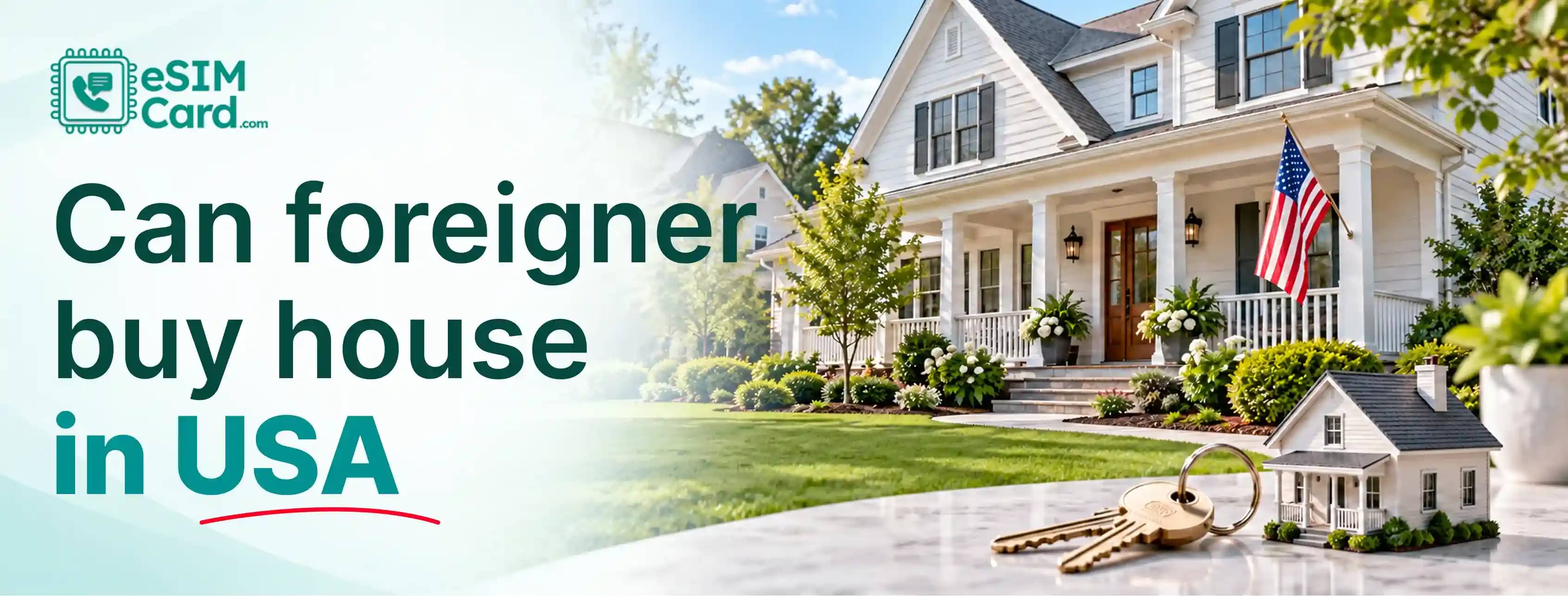
Can a Foreigner Buy a House in the USA? 2026 Guide
A foreigner can buy a house in the United States without becoming a US citizen. You do not necessarily need a Green Card, a US visa or permanent residency to own residential property.
Owning a house in America does not give you the right to live there. Foreign buyers also face questions that American buyers might not encounter.
It depends on your nationality, where you buy and how you plan to use the property. Some states also restrict particular types of foreign land ownership. Let's look at what foreign buyers need to know before spending money on an American home.
In this article, you will learn how A foreigner can buy a house in the United States state land rules, ITIN requirements, taxes, and remote buying.
4.9

Highly Rated
Based on 500,000+ customer reviews

Trusted worldwide
Over 1 million travelers across the globe have trusted us

Travel Friendly
No swaps, global connectivity ensured
Can a Foreigner Buy a House in the USA?
Yes. Foreign nationals can generally purchase residential property in the United States, even if they live overseas.
US citizenship is not a general requirement for buying a house. Permanent residency is not either.
You can purchase a single-family home, condominium, townhouse or vacation property. Certain state laws and property-specific restrictions may affect your purchase.
There is another distinction worth understanding. A foreign buyer living in the United States and someone purchasing from another country may face different financing and documentation requirements.
So yes, foreign ownership is a real part of the American housing market. You just need to understand the rules before making an offer.
Are There Restrictions on Foreign Property Ownership?
Most foreign buyers looking for an ordinary residential home won't encounter a blanket federal citizenship requirement.
But that does not mean every property is available to every foreign buyer. State laws can restrict certain foreign individuals, companies or governments from purchasing particular types of land. Agricultural property attracts the most attention.
What states restrict foreign land ownership?
The National Agricultural Law Center reports that approximately 29 states have laws restricting some forms of foreign ownership of private agricultural land.
These laws differ. Some target particular foreign governments or entities. Others cover nonresident foreign nationals or impose limits based on land use and ownership structure.
Check the law in the exact state before paying a deposit. Do not assume agricultural land restrictions automatically apply to an ordinary house.
According to the National Agricultural Law Center's research on foreign land ownership restrictions, approximately 29 US states limit certain forms of foreign ownership of private agricultural land, with restrictions varying by state and ownership category.
Does Buying a House in the USA Give You Residency?
No. Buying property in America does not give you a visa, Green Card or automatic permission to stay longer.
This is where many international buyers get confused. You might purchase a $500,000 home in Florida and still need to follow the same immigration rules as any other visitor.
What about the EB-5 investor visa?
The EB-5 program is a separate immigration route. It involves investing qualifying capital in a new commercial enterprise and meeting employment requirements. The investment must create at least 10 qualifying full-time jobs.
Buying a personal residence does not meet those requirements simply because the property costs a substantial amount.
If your main goal is moving permanently to America, speak with an immigration attorney before choosing an investment route.
What Documents Does a Foreign Buyer Need?
You do not need exactly the same paperwork as every American buyer. Your lender, title company and transaction structure determine the final requirements.
Most international buyers should prepare the following:
- Valid passport: Your main identity document.
- Proof of address: A foreign utility bill, bank statement or other accepted document.
- Proof of funds: Bank statements showing you can afford the purchase.
- Source-of-funds evidence: Documentation explaining where your money came from.
- Income documents: Tax returns, employment records or business income statements if financing.
- Mortgage documents: Additional paperwork requested by your lender.
- Tax identification details: An SSN or ITIN where applicable.
Some buyers also need certified translations of foreign financial documents. Ask the title company and lender for their requirements early. International transfers and document verification can take longer than expected.
Do Foreign Buyers Need an ITIN?
No. An Individual Taxpayer Identification Number (ITIN) is released by the IRS to people who need a US taxpayer identification number but aren't eligible for a Social Security number.
An ITIN is not automatically required simply because you are purchasing a house.
It becomes relevant when you have a qualifying federal tax purpose. For example, you might need one to file a US tax return or handle certain FIRPTA withholding requirements.
The IRS specifically identifies foreign individuals involved in qualifying FIRPTA transactions among potential ITIN applicants.
If you are buying a home without rental income or an immediate tax-reporting requirement, your situation may differ.
Ask a US tax professional whether you need an ITIN before closing. Do not apply without understanding the actual tax purpose.
Can Foreigners Get a Mortgage in the USA?
Yes. Foreign nationals can sometimes obtain US mortgages, even when they live outside America.
But financing depends heavily on your residency status, income, credit history and the lender's policies.
A foreign buyer living in California on an eligible visa may have different options from someone applying from Pakistan, India or the United Kingdom.
Foreign-national mortgage programs are particularly relevant to buyers who live abroad. These loans may accept foreign bank statements and international income documentation. Some lenders also consider assets held outside the United States.
How much down payment does a foreigner need?
There is not one nationwide down-payment requirement for foreign buyers. Some foreign-national mortgage programs request considerably more money upfront than conventional mortgages.
A down payment of 20% to 40% is sometimes quoted in the market, but these figures are not universal requirements. Actual terms depend on the lender, property and borrower.
Cash purchases are also common. If you are applying from overseas, ask lenders specifically about foreign-national mortgage products.
How Much Does US Property Cost for Foreign Buyers?
There is not a special national property price for foreign buyers. You will generally pay the same advertised purchase price as other buyers. Location, property size, condition and local demand determine what you will spend.
Housing prices also vary dramatically between cities. A condominium in Houston may cost considerably less than a comparable property in parts of California. Florida offers another range, depending on the city and neighborhood.
Do not budget around the purchase price alone. You will also need to consider:
- Property taxes and homeowners insurance.
- Mortgage interest and lender fees.
- Inspection and appraisal charges.
- Title insurance and closing expenses.
- HOA fees, if applicable.
- Repairs, utilities and ongoing maintenance.
- Currency conversion and international transfer costs.
What Taxes Do Foreign Property Owners Pay?
Buying a home is only one part of the financial commitment.
Foreign owners may face US tax obligations while owning, renting or selling their property. Estate-tax rules can also matter later.
Your tax residency, ownership structure and applicable treaty provisions can change the outcome.
Property taxes
Property taxes are generally imposed by state and local governments. The amount depends on the property's assessed value and the local tax rate.
For example, owning a $400,000 house does not mean you will pay the same annual property tax in Texas and Florida.
Rental income taxes
Planning to rent your property while living overseas? A nonresident alien's US rental income is generally subject to a 30% tax on gross income, unless a lower treaty rate applies or another tax treatment is available.
There is an important alternative. A valid election generally requires filing Form 1040-NR and following the IRS reporting rules. Speak with a cross-border tax professional before choosing an approach.
What happens when you sell? Understanding FIRPTA
The Foreign Investment in Real Property Tax Act allows the United States to tax certain gains when foreign persons sell US real estate.
Under the general rule, the buyer must withhold 15% of the amount realized, subject to exceptions and reduced-withholding procedures.
That is not necessarily the seller's final tax bill. The withholding is a tax prepayment. Your actual liability is calculated separately, and you may qualify for a refund if too much was withheld.
Can foreign property owners face US estate tax?
Yes. This issue often gets overlooked when overseas buyers purchase expensive American homes.
For a nonresident who is not a US citizen, certain US situated assets can trigger an estate-tax filing requirement when their value exceeds $60,000.
The executor may need to file Form 706-NA. Applicable estate-tax treaties and individual circumstances can change the result.
Can a Foreigner Rent Out a US Property?
Yes. Foreign owners can generally rent out their US homes, even when they live in another country.
You could buy a vacation home in Miami, use it during holidays and rent it during the rest of the year. Owning a property does not automatically give you permission to operate a short-term rental.
Before listing your house on Airbnb or another platform, check:
- City and county short-term rental regulations.
- Zoning and rental permits.
- Homeowners association (HOA) restrictions.
- Condominium rules and minimum lease periods.
- Local lodging and occupancy taxes.
- Property management requirements.
Some residential communities prohibit short-term rentals altogether. If you are overseas, consider hiring a local property manager. Someone needs to handle guest communication, maintenance, emergencies and inspections.
How to Buy a House in the USA as a Foreigner
Buying American property from overseas is not necessarily complicated. But the process involves several people and a fair amount of paperwork.
1. Decide why you are buying
Are you looking for a vacation home, a future residence or an investment property? Your answer affects where you buy, how you finance the property and whether you'll need a property manager.
A vacation condominium in Florida has different considerations from an agricultural property in Texas.
2. Check state and property restrictions
Research the ownership rules before making an offer. Check whether your nationality, ownership structure or intended property type creates restrictions. Review local rental and HOA rules too.
Do not rely on a general statement that foreign buyers can purchase anywhere.
3. Calculate your complete budget
Set a realistic spending limit. Include the down payment, closing costs, property taxes, insurance, maintenance and currency conversion expenses.
If you are financing, get an estimate from a lender before viewing expensive properties.
4. Prepare your documents
Collect your passport, financial statements and proof of funds. Mortgage applicants may also need foreign income records, employment documents and credit references.
Ask your lender which documents require certified translations.
5. Find a local real estate agent
A local buyer's agent can help identify suitable properties and arrange viewings. Choose someone familiar with international buyers. They will have a better understanding of foreign financing, documentation and cross-border payments.
6. Make an offer
Once you have found a property, your agent can help prepare an offer. The purchase agreement usually covers the price, deposit, contingencies and proposed closing date.
7. Deposit earnest money
Earnest money is a deposit showing that you are serious about purchasing the property. It's commonly held by an escrow or title company, depending on local practices.
The amount varies by market and contract. Do not assume a particular percentage applies everywhere.
8. Complete inspections and title checks
This is where you find problems before they become your responsibility. A professional inspector checks the property's physical condition.
A title search examines ownership records, liens and other potential claims. You may also need an appraisal, property survey or flood-risk assessment.
9. Arrange the remaining funds
If you are paying internationally, speak with your bank and the closing company early. Confirm the recipient's bank details using a trusted, independently verified phone number. Real estate wire fraud can cause serious financial losses.
Also check transfer limits, exchange rates and expected processing times.
10. Close the purchase
At closing, you will sign the necessary documents, transfer the remaining funds and complete the ownership transfer.
The closing process varies between states. Some transactions involve attorneys, while others rely heavily on title and escrow companies. Once the deed is properly recorded, you become the legal owner under the applicable property rules.
Should You Buy Personally, Through an LLC or a Trust?
Foreign buyers sometimes consider purchasing property through a Limited Liability Company (LLC) or trust.
An LLC may offer certain liability or management benefits. A trust can serve particular estate-planning purposes. But neither option is automatically better than personal ownership.
Your nationality and tax residency can affect the best arrangement. Speak with a US real estate attorney and cross-border tax adviser before purchasing through an entity.
Can You Buy a US House Remotely From Abroad?
Yes. Many overseas buyers can complete much of the purchase without travelling to America.
You can arrange property searches, speak with agents and review documents online. A local inspector can visit the property and provide photographs or a detailed inspection report.
Some states and transactions also permit remote notarization and electronic signatures. Remote closing is not available under identical conditions everywhere. Your title company or attorney can explain which documents require physical signing or notarization.
If you are buying from overseas, consider having these professionals available:
- A local buyer's agent.
- A title or escrow company.
- A real estate attorney, where appropriate.
- A home inspector.
- A mortgage broker, if financing.
- A US tax adviser.
- A property manager, if renting.
Buyers managing property searches while traveling can also learn about mobile hotspot vs tethering to understand how to share a smartphone's internet connection with a laptop for virtual meetings and document reviews.
Stay Connected With eSIMCard While House Hunting in the US
Imagine arriving in Miami for a week of property viewings. Your agent sends a new address. You need directions, want to call the seller's representative and have to review documents while travelling.
That's when reliable mobile data becomes useful. An American eSIM can give you internet access without purchasing a physical SIM card at the airport.
With eSIMCard, you can explore United States data plans before departure and prepare your phone for property-viewing appointments.
You can use mobile data to:
- Contact real estate agents and property managers.
- Check Google Maps while travelling between viewings.
- Join video calls with mortgage brokers.
- Review property listings and documents.
- Share your connection through a supported hotspot.
Check your phone's eSIM compatibility before purchasing a plan. If you are visiting several cities, having mobile data ready can make your property search considerably easier.
If you plan to attend virtual property tours, make video calls with agents, or browse property listings, estimate how much data you need for travel before choosing a US eSIM package.
How to check if your phone is eSIM Compatible
You can check quickly and easily to see if your phone is eSIM compatible:
- iPhone: Go to Settings > Cellular (or Mobile Service). If you see Add eSIM, your phone supports it.
- Android: Go to Settings > Connections (or Network & internet) > SIM Manager. If you see Add eSIM, your phone supports it.
- Open your phone dialer and type *#06#. If you see an EID number (a long 32-digit number) or an IMEI2, your phone has eSIM capability.
No roaming bill waiting at home
Pay once for local data rates in 200+ countries and leave expensive roaming behind.

Conclusion
Buying a house in America as a foreigner is possible. You do not need to become a citizen or obtain a Green Card simply to own residential property. But do not rush into a purchase based on that answer alone.
Check state ownership restrictions, arrange suitable financing and understand the tax consequences before signing an agreement. If you are buying from overseas, work with professionals who understand international property transactions.
And when you are ready to visit properties, arrange your mobile connectivity beforehand. You can explore eSIMCard's United States eSIM plans and stay connected while meeting agents, visiting neighborhoods and inspecting potential homes.
For a smoother arrival in the United States, follow our guide on how to use an eSIM while traveling to understand installation, activation, and mobile data settings.
FAQs
Can I buy a house in the USA without a visa?
Yes. You do not need a visa simply to own property. Entering and staying in America still requires appropriate immigration permission.
Can a foreigner get a mortgage in America?
Yes. Some US lenders offer foreign-national mortgage programs. Requirements vary depending on your income, assets, residency and credit history.
Do I need an ITIN to purchase property in the USA?
No. An ITIN is required when you have an eligible federal tax purpose and aren't eligible for an SSN. Certain property transactions can create that requirement.
Does buying property in America give you permanent residency?
No. Purchasing a house does not automatically provide a visa or Green Card. The EB-5 program has separate investment and job creation requirements.
Can a foreigner buy a home on rent in the USA?
Yes. Foreign nationals can generally purchase vacation homes, subject to applicable ownership laws. Your permitted length of stay remains governed by immigration rules.
Can I rent out my American house while living abroad?
Yes, you must follow local rental regulations, HOA rules and applicable tax requirements. Short-term rentals may require additional permits.