
Emma Sky
03 Nov 2026
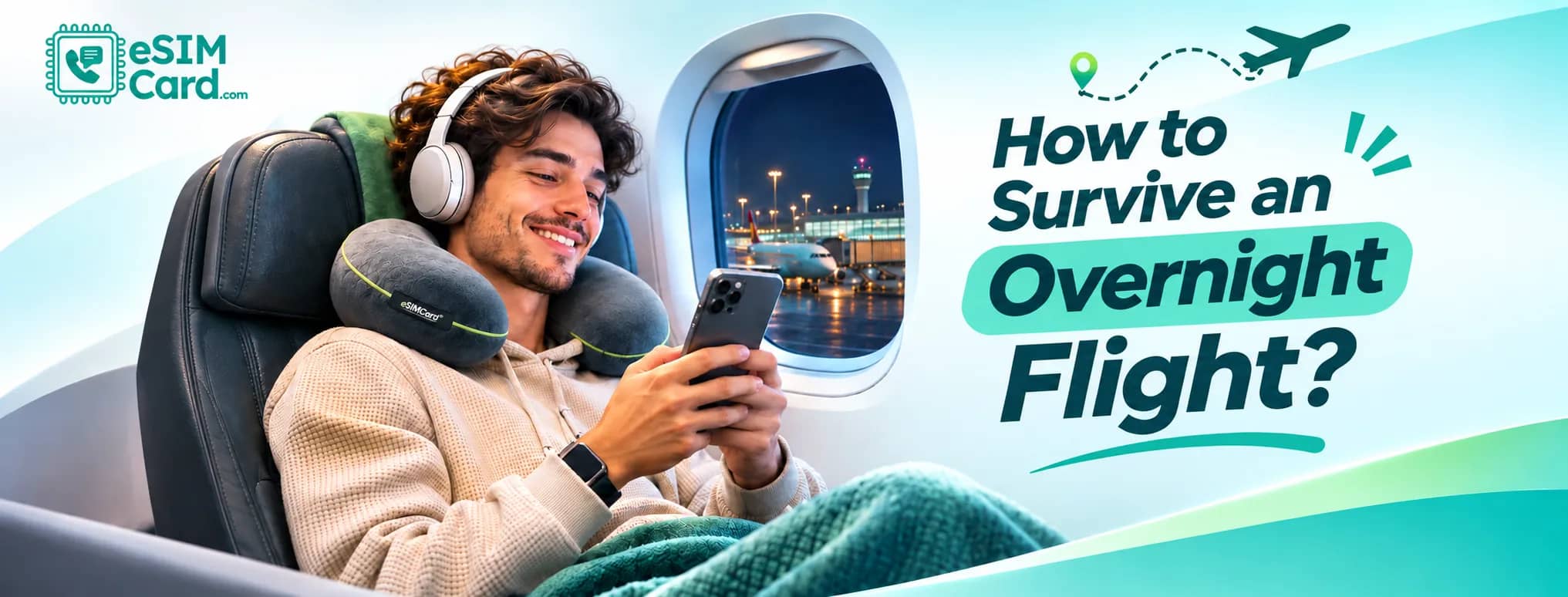
How to Survive an Overnight Flight: Practical Tips to Beat Jet Lag & Fatigue
Your ticket says seven hours. Your body might get only four useful hours to rest.
Boarding takes time. Meal service interrupts the cabin. Then the lights come back on before landing. Suddenly, that overnight flight feels much longer than expected.
Knowing how to survive an overnight flight is not about forcing yourself to sleep for eight hours. It is about protecting the time you actually have.
A six-hour red-eye needs a different approach from a 14-hour international flight. A connecting itinerary brings another challenge because you must wake up, change gates and prepare for another stretch in the air.
Your seat, meal timing, clothing, caffeine and arrival time all play a part. So does knowing when to stop trying to sleep.
In this article, you will learn about practical overnight flight tips, including strategies for economy passengers, connecting flights and different arrival times.
4.9

Highly Rated
Based on 500,000+ customer reviews

Trusted worldwide
Over 1 million travelers across the globe have trusted us

Travel Friendly
No swaps, global connectivity ensured
How to Survive an Overnight Flight: Quick Checklist
Keep these overnight flight tips handy before heading to the airport.
- You can choose a window seat based on your sleep needs.
- Get a normal night's sleep before departure.
- Wear loose clothing and bring an extra layer.
- Pack an eye mask, earplugs and comfortable head support.
- Eat before boarding if the flight's meal service will interrupt your sleep.
- Download movies, music and offline maps before departure.
- Avoid excessive caffeine and alcohol.
- Keep water within reach.
- Move periodically and exercise your calves while seated.
- Plan your first day around your destination's local time.
One more thing. Keep your sleep kit in your personal item, not buried inside your overhead luggage.
Before You Fly: Protect Your Sleep Opportunity
Your overnight flight starts before you reach the airport. Do not deliberately stay awake all night hoping you will collapse into sleep on the plane. Sleep deprivation can make the journey harder and leave you struggling after arrival.
Try to maintain your normal sleep routine before departure. If you are crossing several time zones, gradually shifting your bedtime towards your destination's schedule may help.
Eat a familiar meal before leaving home or at the airport. Choose something that sits comfortably with you rather than experimenting with unfamiliar food.
Also, prepare your phone. Download entertainment, boarding passes, hotel details and maps for offline access.
If you're traveling internationally, learning how to buy an eSIM online before departure can help you arrange mobile connectivity without searching for a physical SIM card after landing.
If you are travelling internationally, check your passport and visa requirements before departure.
How Much Sleep Can You Realistically Get?
Here is where many travellers get their expectations wrong. A scheduled seven-hour flight does not provide seven hours of uninterrupted sleep. Boarding, taxiing, meal service and landing preparations all take time.
Consider this example:
These are illustrative estimates, not fixed airline schedules. Your actual sleep opportunity depends on the airline, route and cabin service.
Plan around the remaining rest window, not the number printed on your ticket. That means eating beforehand, organizing your belongings early and avoiding unnecessary entertainment.
Choose the Best Seat for Your Sleep Style
Your seat can make a surprisingly big difference. A window seat gives you peaceful sleep. An aisle seat makes bathroom breaks and movement easier. Neither is automatically the best choice.
If you sleep deeply and rarely need the bathroom, consider the window. But if sitting still makes you uncomfortable, an aisle seat might suit you better.
Avoid assuming every exit row has extra usable space or that every last row reclines. Aircraft layouts differ. Check your airline's seat map before paying extra.
Is premium economy worth the money?
It depends on your flight length and what happens after landing. On a five-hour flight, an expensive upgrade might not make much sense. On a 13-hour overnight flight before an important meeting, extra space could be worth considering.
Compare the upgrade cost with your budget, expected rest and first-day commitments.
What to Pack for an Overnight Flight
You do not need an expensive collection of travel accessories. A few useful items can make economy seating more comfortable.
Keep these items somewhere you can reach without opening the overhead compartment. A small pouch works well. You can take out your sleep kit once, settle down and leave your bag alone.
How to Build a Sleep Routine After Takeoff
Do not wait until the cabin lights go out to start getting comfortable. Get your surroundings ready early.
Try this simple routine:
- Put your phone, passport and headphones somewhere accessible.
- Visit the bathroom before settling down for sleep.
- Brush your teeth and wash your face if practical.
- Change into comfortable layers.
- Adjust your neck support and eye mask.
- Reduce screen brightness and put your entertainment away.
- Recline your seat when permitted and follow crew instructions.
Give yourself permission to stop checking the flight map every ten minutes.
Even when you're ready to sleep, keep your seatbelt fastened while seated. The FAA's turbulence safety recommendations explain why unexpected turbulence can cause injuries to passengers who aren't securely buckled in.
What If You Cannot Sleep on the Plane?
Sometimes you do everything right and still do not fall asleep. The seat feels awkward. Someone is talking nearby. Your neighbour keeps moving. It happens. Do not turn the remaining flight into a battle against the clock.
Try resting with your eyes closed. Listen to something quiet or concentrate on slow, comfortable breathing.
You might not achieve deep sleep, but quiet rest can still feel better than spending hours switching between movies and social media. Resting is not the same as sleeping, but it is not wasted time either.
If you have not slept much, avoid making your arrival schedule too demanding.
Food, Water, Coffee and Alcohol on a Red-Eye
What you consume before and during your flight affects how comfortable you feel.
A short red-eye leaves little room for a lengthy dinner service followed by entertainment and sleep.
On longer flights, you can plan meals around your intended sleep periods.
Coffee isn't automatically a problem. If you're arriving in the morning and need to stay awake, strategically timed caffeine may help. Just avoid taking it too close to your planned bedtime.
Alcohol is a different story. It might make you feel sleepy initially, but it can fragment sleep and worsen jet lag symptoms.
How to Move Safely During a Long Flight
Sleeping for several hours without moving can leave your legs feeling stiff.
Long-distance travel also increases the risk of blood clots in some passengers, particularly those with additional risk factors.
The CDC recommends occasional movement and calf exercises during long journeys.
While seated, try these simple movements:
- You can lift and lower your heels while keeping your toes on floor.
- You can raise your toes while keeping your heels down.
- Tighten and release your leg muscles.
- Stretch your legs gently when space allows.
When it is safe, stand up and walk around occasionally. Never ignore the seatbelt sign just to complete a movement routine. Follow cabin crew instructions and wait until conditions are safe.
Do You Need Compression Socks or Sleep Aids?
These two topics deserve more care than ordinary packing advice.
Compression socks
Compression socks are not mandatory for every overnight passenger. People with previous blood clots, recent surgery, pregnancy, certain medical conditions or other clotting risk factors may need additional advice.
If you have these risk factors, ask a healthcare professional whether graduated compression stockings are appropriate. Do not take aspirin solely to prevent travel-related blood clots. The CDC does not recommend this approach.
Melatonin and sleeping pills
Melatonin is not a universal solution for sleeping on an airplane. Its timing matters, especially when you are crossing several time zones.
Taking it at the wrong time can work against your body clock. Some antihistamines and long-acting sedatives can also affect coordination, alertness and physical performance.
Do not experiment with a new sleep medication on an aircraft. If you are considering melatonin or another sleep aid, discuss it with a healthcare professional before travelling. Never combine sedating medication with alcohol.
Short Red-Eye vs 14-Hour Overnight Flight
Not every overnight flight deserves the same plan. A short red-eye requires quick decisions. A longer international flight gives you more time to sleep, eat and move.
For a six-hour flight, consider eating before boarding and sleeping soon after takeoff. On a 14-hour flight, you have more flexibility. You might sleep for one longer period, wake up for food and movement, then rest again.
The trick is avoiding an accidental schedule that leaves you wide awake when you reach your destination.
How to Survive an Overnight Flight With a Layover
A connecting itinerary changes everything. Imagine flying for 6 hours and 35 minutes, spending two hours at an airport, then boarding another 14-hour flight.
That's a long day, even for experienced travellers. Treat both flights as one connected rest plan. During your first flight, sleep when it makes sense. Do not necessarily use every available hour for sleep if you need to be alert during your connection.
Once you land, check your next boarding gate and departure time. Keep your passport and boarding pass accessible. Use the connection to walk, visit the bathroom and eat if needed.
If your international itinerary includes several European destinations, comparing Europe eSIM plans before departure can help you arrange connectivity across supported countries without buying separate local SIM cards.
If you plan to sleep in an airport lounge or quiet terminal area, set an alarm. Keep your belongings secure and allow enough time to reach your next gate.
Avoid taking a new sedating medication before a short connection. You need to wake up properly and respond to changes. Also, check whether your connecting flight uses a different local time zone.
Sleep According to Destination Time
Your body follows its own internal clock. Crossing several time zones can disrupt that rhythm. You might feel sleepy during the afternoon or wide awake at three in the morning.
Start thinking in destination time before departure. Adjusting your meals and sleep schedule gradually can help. However, the direction of travel matters.
Eastbound travel generally requires your body clock to move earlier. Westbound travel generally requires it to move later. Westward adjustment is often easier for many travellers.
Light exposure also matters. But do not assume that immediate morning sunlight is the right answer for every route. The CDC recommends timing light exposure according to the direction and size of the time-zone change.
If you have a complicated itinerary, a jet lag calculator can help estimate suitable sleep and light timings.
What to Do Before Landing
Use the final 60 to 90 minutes to prepare for arrival. Do not wait until the aircraft reaches the gate to start looking for your hotel reservation. Check your phone battery and review your arrival arrangements.
Make sure you have:
- Your passport and travel documents.
- Your hotel address and booking confirmation.
- Your airport transfer details.
- Your onward flight information, if applicable.
- Offline maps and important contact details.
Freshen up if you have time. Drink some water and stretch gently when permitted. A little preparation now can save you unnecessary stress in the arrivals hall.
What to Do After Landing Based on Arrival Time
Your arrival time should shape your first day. A morning landing is very different from arriving at 8 p.m. after a long international flight.
A short nap of around 20 to 30 minutes may improve alertness. But sleeping for three or four hours in the afternoon can make falling asleep that night much harder.
Get daylight at an appropriate time for your destination and travel direction. Gentle walking can also help you feel more alert. Do not schedule a packed sightseeing day immediately after an overnight flight. Give yourself some breathing room.
Stay Connected With eSIMCard When You Land
Your phone becomes especially useful once you reach the arrivals hall. You may need to check your hotel booking, open Google Maps, contact your driver or receive an update about another connecting flight.
Airline Wi-Fi and mobile data are two different things. Airline Wi-Fi may provide internet during the flight, depending on the aircraft and airline.
A regular travel eSIM connects to supported terrestrial mobile networks after landing. It does not provide ordinary cellular internet while cruising. Prepare your mobile connection before leaving home.
Install your plan before departure if its activation rules allow it. Save the QR code and check your settings while you still have reliable Wi-Fi.
If you're installing a travel eSIM for the first time, our guide on how to get an eSIM QR code explains where to find your installation details and how to set up your digital SIM.
eSIMCard Global Plans for International Arrivals
If you are visiting several countries, a Global eSIM may be worth considering.
Check the current plan details before purchasing. The plans support hotspot sharing. The applicable plans also state that activation begins when the first byte of data is consumed.
How to check if your phone is eSIM Compatible
You can check quickly and easily to see if your phone is eSIM compatible:
- iPhone: Go to Settings > Cellular (or Mobile Service). If you see Add eSIM, your phone supports it.
- Android: Go to Settings > Connections (or Network & internet) > SIM Manager. If you see Add eSIM, your phone supports it.
- Dial *#06#: If the phone displays an EID, that usually indicates eSIM support.
Internet in your pocket, before the plane door opens
Activate your plan on landing day and use maps, rides, and messages from the first minute.

Conclusion
A comfortable overnight flight does not require perfect sleep or expensive accessories. It requires a realistic plan.
Know how much rest time you have, prepare for connections and decide what your first day should look like. Pack the items you will actually use and keep your phone ready for arrival.
And when you step off the plane, give yourself a little time to wake up properly. Planning your next international trip? Explore eSIMCard Global eSIM plans and arrange your mobile data before departure.
That way, finding your hotel, checking maps and contacting your airport transfer won't have to wait for airport Wi-Fi.
FAQs
How do you survive an overnight flight?
Prepare your sleep environment before boarding, protect your main rest period and move periodically. Follow your destination's local schedule where practical.
Is a window or aisle seat better for a red-eye?
A window seat usually means fewer interruptions and provides wall support. An aisle seat makes bathroom breaks and movement easier. Choose based on your priorities.
What should I eat before an overnight flight?
Choose a familiar meal that sits comfortably with you. Eat before boarding if the airline's meal service will interrupt your limited sleep opportunity.
Should I drink alcohol to sleep on a plane?
No. Alcohol can make you sleepy initially but may cause fragmented sleep. It's not a reliable way to rest during a flight.
How often should I move during a long flight?
Move periodically when it is safe. The CDC suggests occasional walking and calf exercises, with an aisle seat making movement easier.
Do I need compression socks for an overnight flight?
No. Travellers with additional blood-clot risk factors should ask a healthcare professional whether compression stockings are suitable.
Should I nap after an overnight flight?
A short nap may help you feel more alert. Avoid lengthy daytime naps because they can interfere with your next night's sleep.
Is premium economy worth it for an overnight flight?
It can be worthwhile when extra space makes resting easier, and you have important plans after arrival. Compare the upgrade cost with your budget and flight duration.
Does an eSIM work while the plane is flying?
A regular travel eSIM uses supported terrestrial mobile networks after landing. Use onboard airline Wi-Fi for internet access during the flight when available.