
Emma Sky
03 Sept 2026
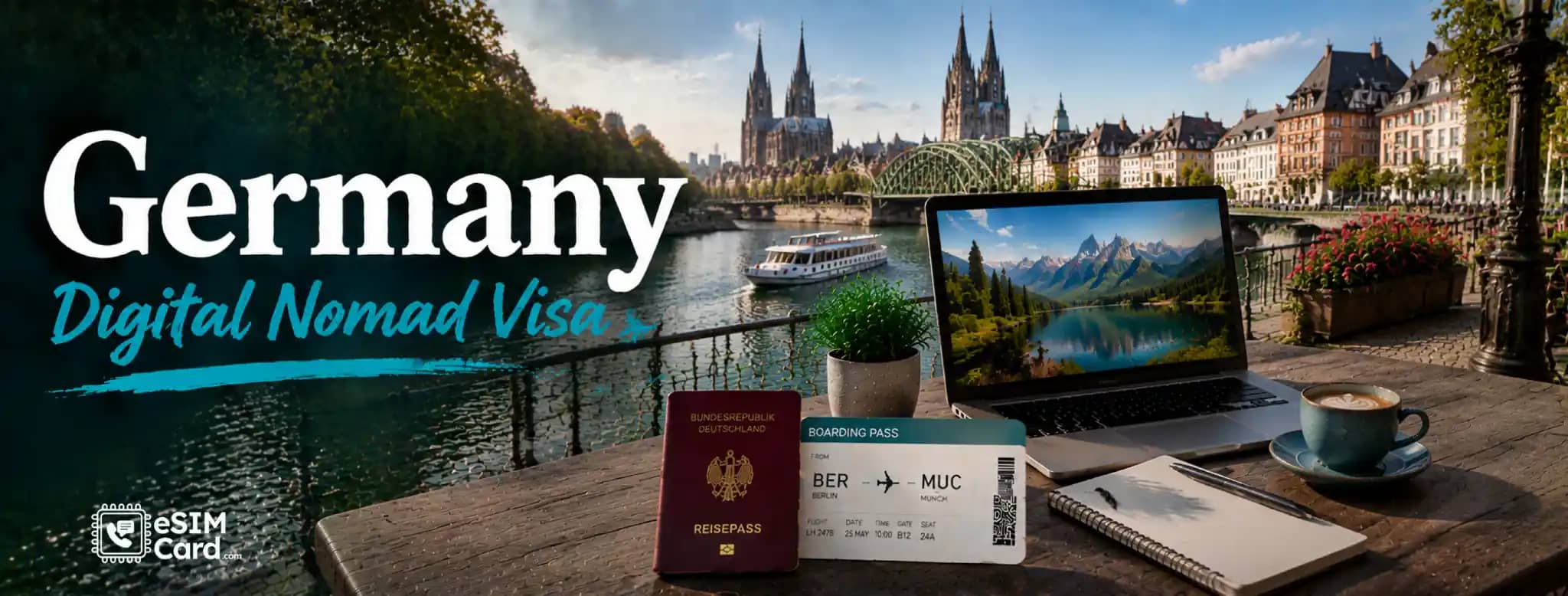
Germany Digital Nomad Visa 2026: Requirements and Application
A remote designer, an online shop owner and a salaried developer may all call themselves digital nomads. Germany may place each person in a different legal category.
Germany doesn't offer a residence permit officially called a Germany digital nomad visa. Eligible independent professionals usually consider the freelance residence permit.
Business founders may need the commercial self-employment route. Your real work setup matters more than the label.
A salaried employee working for one overseas company isn't automatically a freelancer. Their immigration, payroll, tax and social-security position may need separate review.
This guide explains the routes, requirements, documents, fees, taxes and application process. It also covers mobile data through eSIMCard before you arrive.
4.9

Highly Rated
Based on 500,000+ customer reviews

Trusted worldwide
Over 1 million travelers across the globe have trusted us

Travel Friendly
No swaps, global connectivity ensured
Does Germany Have a Digital Nomad Visa?
No. Germany has no residence category officially named the digital nomad visa. Eligible freelancers usually consider Section 21(5), while commercial founders may apply under Section 21(1).
People still search for a German digital nomad visa because the phrase describes a working lifestyle. German law focuses on the activity itself.
Authorities look at how you earn, who controls the work and whether the activity is freelance, commercial or employed.
Section 21(5) covers eligible liberal freelance work. Section 21(1) covers commercial self-employment and requires a stronger business case. German federal guidance treats these as separate routes.
The Opportunity Card is different. It is mainly a job-search route, not Germany's standard permit for remote workers.
It can initially be issued for up to one year and allows secondary work averaging 20 hours weekly. Countries such as Portugal offer permits aimed specifically at remote workers.
Which German Visa Route Fits Your Work Status?
Digital nomad isn't an employment category. Before collecting paperwork, identify how Germany may classify your work.
The official Make it in Germany portal provides guidance on self-employment and residence options for international professionals.
EU citizens and citizens of Iceland, Liechtenstein, Norway and Switzerland can work without a German visa or residence permit. Most other nationals need the correct visa or residence title.
Freelancers sell independent professional services. Writers, translators, designers, teachers, artists, engineers and some consultants may fit this category.
A Gewerbe is a commercial activity. Examples may include trading, retail or another business that doesn't qualify as a liberal profession.
One overseas employer changes the picture. If the company controls your salary, hours and duties, calling yourself a freelancer doesn't settle your status. Get case-specific advice before moving.
Is the Freelance Permit the Same as a Germany Remote Work Visa?
No. Germany doesn't issue a general Germany remote work visa for everyone who works online. The freelance permit is an Aufenthaltserlaubnis for eligible independent work.
The permit is sometimes called a Freiberufler visa. However, it only applies when your real activity qualifies as independent freelance work. Those search terms describe the closest route. They aren't official visa titles.
A salaried foreign employee may need a different solution. The authorities will consider the actual contract and working relationship, not the wording used by the applicant.
Germany Digital Nomad Visa Requirements
Germany doesn't publish one universal checklist for every freelancer. Your profession, nationality, city and business model can change the evidence requested.
The main requirements usually include:
- A valid passport
- Adequate health-insurance coverage
- Enough money to support yourself
- Genuine freelance or business activity
- Any licence required for a regulated profession
- Pension provision when the age rule applies
Freelance applicants under Section 21(5) must show that they can finance their projects. Client contracts, letters of intent, enquiries, a portfolio and an income forecast may support the application.
Qualifications can matter too. A regulated profession may require formal recognition or permission to practise before the permit can be issued.
Applicants older than 45 generally need to prove adequate pension provision. The responsible authority decides whether the submitted evidence meets the current requirement.
Commercial founders under Section 21(1) face extra tests. Their plan should show economic interest or regional demand, a positive economic effect and secured financing.
Authorities may review the founder's experience, funding, market case and likely business impact. A clear business plan is central to this route.
Germany doesn't publish one national minimum income for every freelance applicant. A mission or Ausländerbehörde may ask for savings, local-client evidence or detailed forecasts.
Documents Needed for a German Freelance Visa
A strong document set tells one consistent story. Your contracts, bank records and forecasts shouldn't contradict each other.
Documents in another language may need certified German translations. That doesn't mean every copy must be notarised.
Keep originals and digital copies. Don't treat a Steuernummer as a universal pre-entry document unless your mission specifically requests it.
Document requirements aren't identical across Germany. The responsible mission and local Ausländerbehörde may request further evidence based on your profession and circumstances.
How to Apply for the Germany Freelance Visa
The correct sequence depends on your nationality. Booking a flight first can leave you in Germany without permission to begin work.
1. Confirm Your Route
Use the Federal Foreign Office Visa service and the German mission responsible for your country of residence. Decide whether the work is freelance, commercial or employed.
2. Check Whether You Need an Entry Visa
Most non-EU nationals need the correct national visa before travelling. Citizens of Australia, Canada, Israel, Japan, New Zealand, South Korea, the UK and the US may generally enter without a national visa.
They can apply for the required residence title after arrival. That exception doesn't give automatic work permission. You must receive the required residence title before starting the activity.
Applying before travel may still be useful. Local appointment delays could postpone the date when you can legally start working.
3. Prepare Your Evidence
Collect insurance, financial records, qualifications and professional permissions. Add contracts, letters of intent, forecasts and business-plan records that match your chosen route.
Check names, dates and financial figures carefully. Different documents shouldn't present conflicting versions of the same business activity.
4. Submit the Application
Many national visa applications can begin through the Consular Services Portal. Applicants can submit documents online for initial review.
An in-person appointment is still required for biometric data, original-document checks and payment. The online process doesn't make the visa fully remote.
5. Travel After Approval
Carry the records listed by the mission. Keep secure copies in case an airline, border officer or local authority requests them.
Check when your health-insurance coverage must begin. The required starting date may depend on the application and entry arrangements.
6. Register Your Address
After moving into a registrable home, complete Anmeldung with the local registration office.
A landlord's Wohnungsgeberbestätigung is normally required. Registration is generally due within two weeks of moving into the address.
Hotels and holiday apartments don't always allow residential registration. Ask the provider before relying on temporary accommodation for Anmeldung.
7. Apply for the Residence Permit
Contact the local Ausländerbehörde before your entry permission or lawful stay expires.
Ask for its latest checklist rather than relying on another city's requirements. Appointment systems, forms and requested evidence may differ.
8. Complete Tax and Professional Registration
Freelancers usually register with the Finanzamt. A commercial founder may also need to contact the Gewerbeamt.
Regulated work can require recognition or registration with a professional body. Check this before accepting work in Germany.
Official Source Check
Germany Digital Nomad Visa Cost, Processing Time and Validity
German federal guidance lists €90 as the usual visa fee. A residence permit can cost up to €100, while a settlement permit can cost up to €147.
Local fees and exemptions may differ. Confirm the amount with the mission or local authority before your appointment.
A self-employment residence title can initially be issued for up to three years. The authority may grant a shorter period based on the project, finances and evidence.
Processing time isn't fixed nationwide. It depends on the mission, document review, local authority and appointment availability. Apply well before your intended move.
Can You Work Remotely in Germany on a Tourist Visa?
A tourist or short-stay status doesn't automatically give a non-EU visitor permission to work in Germany.
The Schengen 90-days-in-180 rule controls the permitted stay. It doesn't create work authorisation.
A business meeting and ongoing paid work may be treated differently. Regular client delivery, salaried duties or running a company from Germany can raise immigration concerns.
German federal guidance states that a tourist or Schengen visa generally can't be used to enter Germany and work.
Don't rely on quiet remote work as a loophole. Check the Visa Navigator before travelling. EU, EEA and Swiss citizens have different freedom-of-movement rights.
Do Digital Nomads Pay Tax in Germany?
Possibly. Immigration permission and tax residence are separate questions. German tax law may consider whether you keep a home in Germany and where you have your habitual abode.
A continuous stay longer than six months can be treated as a habitual abode, subject to limited exceptions.
That is why the 183-day rule isn't a complete answer. Tax treaties, client locations, family ties and the type of income can all affect the outcome.
Freelancers may need a Steuernummer. Commercial activity can raise VAT or trade-tax questions.
A foreign employer may also face German payroll and social-security duties. This can affect both the employee and the overseas business.
This is general information, not personal tax advice. A German tax adviser should review your residence, clients, employer and treaty position.
Living and Working Online in Germany
Berlin attracts many international founders, freelancers and creative professionals. Munich has a strong business base, while Hamburg and Cologne are known for media and commerce.
Leipzig offers a smaller-city alternative. Your choice may depend on housing, clients, professional networks and local appointment availability.
Housing can be difficult in major cities. Temporary accommodation may help at first, but hotels and holiday rentals don't always permit Anmeldung.
A coworking space can provide a desk, meeting rooms and a suitable place for daily work. Don't assume it can be used for residential registration.
How to Stay Connected in Germany With an eSIM
Using an eSIM is one of the easiest ways to get mobile data in Germany without buying a physical SIM card. Before your trip, you can choose a reliable Germany eSIM plan and activate mobile data as soon as you arrive.
You can choose a plan before travelling, install it on your phone and connect after landing. Start by checking whether your phone supports eSIM and is unlocked from its current carrier.
After purchasing a Germany eSIM from eSIMCard, follow the installation instructions and keep the plan turned off until the recommended activation time.
Before departure, save the QR code or installation details somewhere accessible offline. Keep your home SIM active if you still need banking codes or verification messages.
Set the Germany eSIM as your mobile-data line and disable automatic data switching to avoid roaming charges on your primary SIM.
A Germany-specific plan works well when you are staying in one country. Choose a Europe eSIM when your trip also includes France, Italy, Austria or other nearby destinations.
Check the plan's validity, network coverage and hotspot support before buying. Hotspot access can be useful when you need internet on your laptop for client work, apartment searches or immigration appointments.
How to Check If Your Phone Is eSIM Compatible
You can check eSIM compatibility through your phone settings or by looking for an EID number. The EID is a unique identifier used by eSIM-enabled devices.
Check on an iPhone
- Open: Settings > Cellular or Mobile Data
- Look for Add eSIM or Add Cellular Plan. If this option appears, your iPhone likely supports eSIM.
- You can also open: Settings > General > About.
- Scroll down and look for an EID. Its presence usually confirms eSIM support.
Check on an Android Phone
- Open: Settings > Network & Internet > SIMs
- Depending on your phone, you may see Add eSIM, Download a SIM or Add Mobile Plan.
- On Samsung phones, open: Settings > Connections > SIM Manager
- Look for Add eSIM.
Use the EID Check
- Dial *#06# from your phone. If an EID appears with the IMEI numbers, the device usually supports eSIM.
- Some regional versions of the same phone model may not include eSIM. Your device must also be carrier unlocked before you can install an eSIM from another provider.
Conclusion
Germany doesn't offer an official digital nomad visa. Your legal route depends on whether you're a freelancer, business founder, salaried employee or job seeker.
Before applying, check your nationality, work arrangement and the latest document list from the responsible German mission or Ausländerbehörde.
Foreign employees and anyone with cross-border tax questions should also seek professional advice.
Once your travel date is confirmed, choose an eSIMCard Germany or Europe eSIM plan before departure.
You can use maps, email, banking codes and appointment details as soon as you land, without waiting for a local SIM contract.
FAQs
Does Germany Have a Digital Nomad Visa?
No. Germany doesn't officially offer a visa with that name. Eligible independent professionals may consider the freelance residence permit under Section 21(5). Business founders may need the commercial self-employment route under Section 21(1).
Is There a Minimum Income for the German Freelance Visa?
No universal national minimum is published for every applicant. You must show that you can finance the activity and cover your living costs. The mission or Ausländerbehörde may request savings, forecasts, contracts or other financial evidence.
Do I Need German Clients for a Freelance Visa?
Not under one nationwide rule. Contracts or letters showing genuine demand can strengthen the case. The responsible mission or city may have its own expectations, so check whether it requests German clients or evidence of local economic interest.
Can I Work for a US or UK Company From Germany?
Possibly, but salaried foreign employment doesn't automatically qualify as freelance activity. Immigration permission, German payroll, employment law, tax and social-security rules may all apply. Get advice based on the actual contract and working relationship.
How Long Does the Germany Digital Nomad Visa Take?
Germany doesn't publish one processing period for every freelance application. Timing depends on the mission, your document set, the local foreigners authority and appointment availability. Apply before your intended move and don't book around an unconfirmed approval date.
How Long Is the German Freelance Residence Permit Valid?
A self-employment residence title may initially be issued for up to three years. The actual period can be shorter. The authority considers the planned activity, financial evidence and the facts of the individual application.
Can US Citizens Apply After Arriving in Germany?
Yes. US nationals are among the citizens who may generally enter without a national visa and apply for the required residence title locally. They still need permission before starting freelance or commercial work.
Can My Spouse or Children Move With Me?
Family reunification may be available, but approval isn't automatic. Requirements can depend on your residence title, income, housing, insurance and family relationship. Check the official family-reunification rules and the responsible German mission.
Is the Opportunity Card a Digital Nomad Visa?
No. The Opportunity Card is primarily a job-search route. It may initially be issued for up to one year and permits secondary work averaging 20 hours weekly. It isn't Germany's standard permit for overseas remote employment.
What Is the Best Internet Option for Digital Nomads in Germany?
An eSIM is useful when you need data immediately after landing. A Germany eSIM works for a single-country stay, while a Europe eSIM may suit a multi-country trip. Compare coverage, validity, data allowances, activation rules and hotspot support before buying.