
Emma Sky
24 Jul 2026
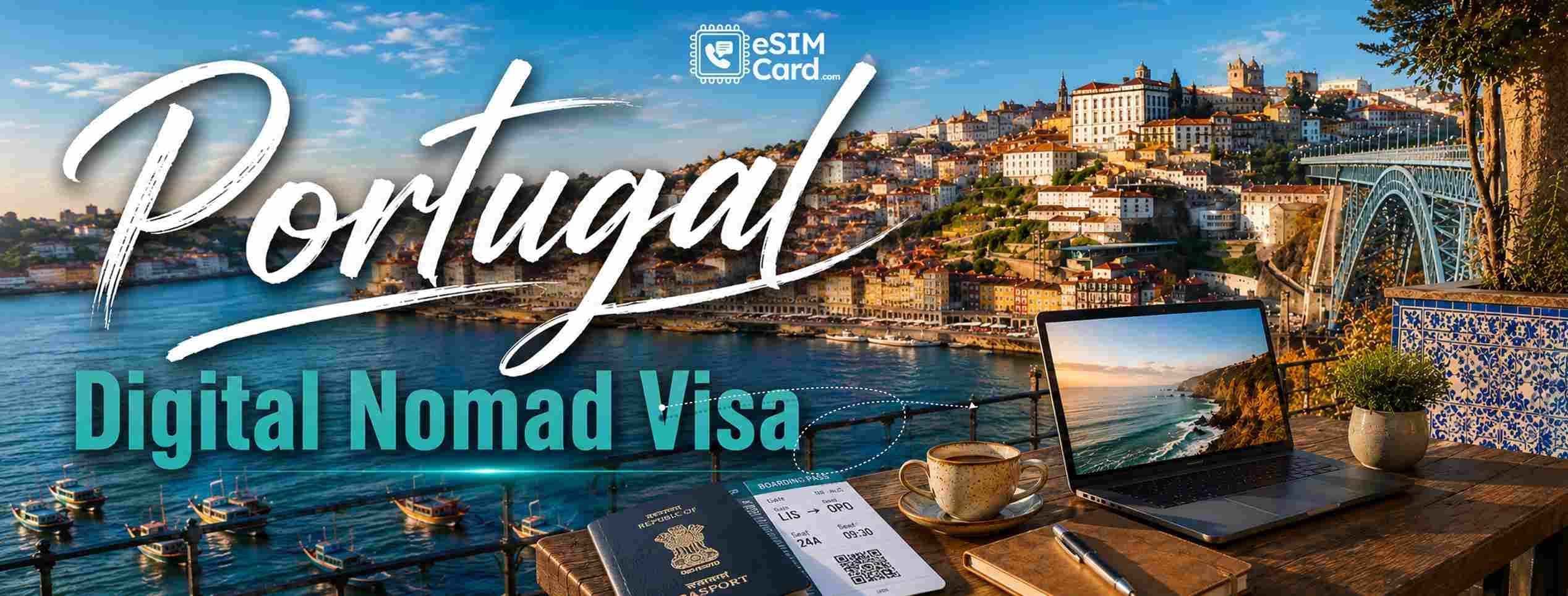
Portugal Digital Nomad Visa (D8) in 2026 | Complete Guide for Remote Workers
Portugal launched the digital nomad visa in October 2022, which allows non-EU freelancers to live and work in the country. D8 visa permits the nomads to live in Portugal for up to two years.
If you're a freelancer or a remote worker dreaming of a life in Europe, Portugal’s D8 Visa is probably top of your list. The Digital Nomad Visa is a specific residence permit for those outside the EU/EEA.
But there are some requirements to get your foot in the door. You must show your monthly income of at least €3,480 per month. In this article, I will go through the details about the requirements for a nomad to get the Portugal digital nomad visa.
4.9

Highly Rated
Based on 500,000+ customer reviews

Trusted worldwide
Over 1 million travelers across the globe have trusted us

Travel Friendly
No swaps, global connectivity ensured
Understanding the Portugal Digital Nomad Visa (D8 Visa)
The Portugal D8 visa is an ideal opportunity for travelers to live their dream life in Europe. D8 is built for the active workforce. It targets people who are actually earning their living right now from companies or clients based outside of Portugal.
If you're planning to travel across multiple European countries while working remotely, choosing the best eSIM for Europe can help you stay connected throughout your journey.
Whether you’re a marketer running global ads or a writer like me, this visa gives you a legal way to call Europe home without pausing your career.
D7 vs. D8 Visa: Which One Should You Choose?
I see people get confused choosing between D7 and D8, but the choice is actually quite simple. It all comes down to where your money comes from. D7 is the autopilot route; it’s for pensions, dividends, or rental checks.
On the other hand, D8 is your only real path if you have to actually work for your monthly pay. If you’re not ready to move to Portugal full-time, you can get the "Temporary Stay" version. It lets you keep your nomadic lifestyle while having a cozy base in Lisbon.
Eligibility and Income Requirements for 2026
Your bank statement is the most important part of this whole process. The Portuguese government set the income limit on its national minimum wage. Here is the minimum monthly income requirement for a nomad in Portugal.
- You need to show your minimum monthly income of €3,480 to €3,680.
- If you’re bringing a partner or kids, that number goes up. It adds about 50% for your spouse and 30% for each child.
AIMA (Portuguese authority for managing migrant integration) will ask you to show the last three months of bank statements. You can check more details about this on their official website AIMA.
Here’s a tip to do it.
- Don't just show the bare minimum.
- If you can show some extra savings, it proves that you won't struggle with the rising rents in places like Lisbon.
Two Routes to Portugal: Temporary Stay vs. Residency Visa
There are two distinct paths to get into Portugal. Your paths depend on what you want for your future.
1. Temporary Stay Visa (Up to 1 year)
This is the one for you if you just want to test drive the country for a year. You can come and go as you like and travel across the Schengen zone. You usually don't need a 12-month lease just to get approved.
2. Residency Visa (Over 1 year)
If you’re looking for a Portuguese passport, go this way. It starts with a two-year permit that you can renew for three more. After five years of living here legally and passing a basic A2 language test, you can officially call yourself a Portuguese citizen.
Step-by-Step Application Process
Portuguese bureaucracy is like a game of strategy. Since AIMA took over, here is the general roadmap to apply for the visa.
- Get your NIF (Tax ID): Your NIF is your lifeblood in Portugal. You can't even sign a lease or open a bank account without it. You can easily get this through an online service before you even leave home.
- Open a Local Bank Account: While digital banks like Revolut are great for coffee, a local account at a bank like Millennium BCP looks much better on your residency application.
- The VFS Global Appointment: You'll start this process at a VFS center in your home country. Bring your passport, an apostilled criminal record, and Schengen-compliant health insurance.
- The AIMA Meeting: Once you land in Portugal, you’ll eventually meet with AIMA for your biometrics. This is the final hurdle before your physical residence card arrives in the mail.
Why Staying Connected is Crucial for D8 Visa Success?
When you’re applying for a Digital Nomad Visa, you actually have to prove you’re digital. AIMA officers look for stability. Nothing looks more unreliable than missing a crucial email or a legal call because your WiFi died. Having a reliable connectivity setup is literally part of your visa strategy.
You can buy the eSIM data plan to stay online the second you step off the plane. Don't risk your bank transfers or sensitive visa uploads on shaky hotel WiFi. Buy the eSIMCard Portugal eSIM to get an instant connection that keeps you professional while you’re navigating.
Critical Documents Checklist for a Successful Application
Don't let a missing paper kill your dream, and ensure that you have the complete documents file. Your folder should definitely include:
- Valid passport (with at least 6 months left).
- Two recent passport photos.
- Proof of accommodation (aim for a 12-month lease if you want the residency visa).
- A clean criminal record.
- A personal cover letter explaining why you’ve picked Portugal.
Landing in Portugal: The First 30 Days
Your first month is going to be a total blur of exploring. Between finding a desk at a coworking space and scouting the best spots in Ericeira, you absolutely need to stay online.
Whatever you do, don't waste your first day hunting for a SIM card shop at the airport. It’s a hassle you don't need. eSIM technology is the perfect choice for nomads to get 4G/5G data the moment they land. If you're interested in how eSIM compares with the latest SIM technology, read our guide on eSIM vs iSIM.
eSIM data makes it so much easier to find your apartment on Google Maps or translate a document at the local police station.
Cost of Living vs. Lifestyle for Digital Nomads
Portugal is still one of the cheaper spots in Western Europe. Expect to pay between €1,300 and €2,000 for a decent one-bedroom in the city.
If you want more for your money, look into Braga or the Madeira Digital Nomad Village. The lifestyle here is amazing, and your budget will go much further.
Tax Implications: Navigating the Post-NHR Era
The tax rules have changed. In 2026, the old NHR system will be gone, replaced by new incentives. I recommend you talk to a Portuguese tax pro early on to see how your global income will be handled.
Pros and Cons of Portugal Digital Nomad Visa
The Good
- You can travel across 29+ Schengen countries.
- Portugal is incredibly safe, with great healthcare.
- A very clear 5-year path to an EU passport.
- The community of remote workers is massive.
The Bad
- You may wait longer for the AIMA appointments.
- Living in major cities costs high rents.
- Taxes can be a headache if you don't plan ahead.
Conclusion
Portugal offers the Digital Nomad Visa that allows freelancers and remote workers to live in the country. The Portugal Digital Nomad D8 visa is the legal permit to live your dream life in Europe.
To get the visa, make sure your income hits that €3,680 mark, and keep your papers organized. Similarly, make sure your digital life is also ready, get your eSIM card and set up before you fly, so you can hit the ground running the moment you land.
FAQs
Can I bring my family on a Digital Nomad Visa?
Yes, you can bring your family, including your spouse, children, and even dependent parents, through the family reunification (D6).
Does the Portugal D8 visa lead to citizenship?
Yes, after five years of legal residency in Portugal, you can get permanent residency or a Portuguese passport.
What is the processing time for the D8 visa in 2026?
In 2026, the Portugal D8 Digital Nomad Visa processing time ranges from 3 to 4 months (60–120 days).
Can I travel the Schengen Area with this visa?
Yes, the visa lets you move freely through the Schengen Zone for up to 90 days.