
Emma Sky
04 Feb 2026
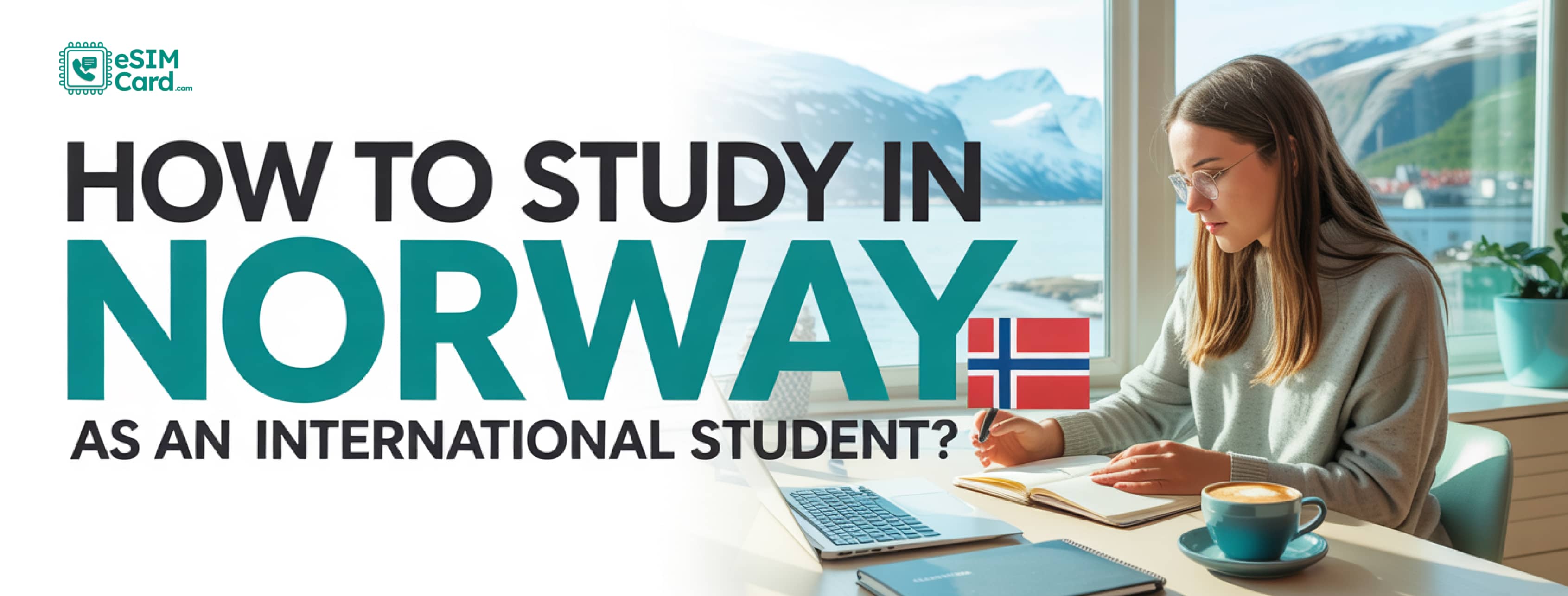
How To Study in Norway as an International Student?
Who doesn't want to grab an opportunity for quality International education while staying on budget? Selecting a country for study purposes under a budget is always challenging. But not anymore!
Norway breaks that myth. Public universities charge zero tuition, even if you’re not from the EU. You're stepping into top‑tier programs in tech, environmental science, and humanities, all backed by modern facilities, social welfare, and healthy campus life.
Sure, the cost of living is higher, but so is the quality of life, safety, and accessible healthcare. Let's learn how to study in Norway as an International student!
4.9

Highly Rated
Based on 500,000+ customer reviews

Trusted worldwide
Over 1 million travelers across the globe have trusted us

Travel Friendly
No swaps, global connectivity ensured
How Norway’s Education System Works
Norwegian universities follow the Bologna structure: Bachelor’s (3 years), Master’s (1–2 years), and PhD (3–5 years). You’ll find both public and private colleges, though public ones are tuition-free.
Programs are offered in English and Norwegian, making international study easier. And if you're from the EU, your degree credits transfer seamlessly under that shared standard.
But obviously, as a student, you want to know what the procedure, criteria, and eligibility are to apply to Norway?
Step-by-Step: Applying as an International Student
The following steps are the easiest way to understand what to do when you want to apply for education in Norway:
1. Choose the Right University and Program
Begin with your passion: engineering, social sciences, business, or climate studies. Top picks include the University of Oslo (social sciences), NTNU in Trondheim (engineering), and BI Norwegian Business School (business & management). Check each program’s language of instruction: many bachelor’s programs are in Norwegian, but master's programs often run in English.
2. Review Entry Requirements
Most bachelor's programs ask for your high school diploma and proof of English proficiency (TOEFL or IELTS). Master's programs often require a relevant undergraduate degree, plus programs may request specific subjects like maths or physics.
3. Submit Your Application
For undergraduate study, apply through Samordna Opptak, the central application system. For master's or PhD programs, use the university’s own portal (e.g., UiO, NTNU). Attach all required documents, transcripts, test scores, and a passport scan, and pay any application fee before the deadline.
4. Await the Reply
Universities generally send admission letters between April–June for fall intake, and sometimes December–February for spring. Use your admission letter to begin visa and accommodation procedures without delay. If you want to know which month is ideal for your arrival, read about the best time to visit Norway.
Visa Made Simple: No Hassle Just Follow!
Obviously, the important thing is a Visa, and the following information is enough to get you one:
Who Needs a Student Visa?
If you're from outside the EU/EEA and plan to study for over 90 days, you need a student residence permit. EU/EEA nationals don’t need a visa but should register locally after three months.
Key Documents You’ll Submit:
- Official letter of admission
- Valid passport
- Proof of funds (~138,000 NOK per year, about USD 12,000)
- Health insurance proof
- Documented accommodation in Norway
How to Apply:
Apply online through the UDI portal 2 to 3 months before your program starts. After your permit is approved, travel in and register in person with the local police to collect your resident permit card.
Tips to Avoid Delays:
Submit full, translated documents early. Avoid waiting until the last minute; processing can take up to 12 weeks.
Planning Your Budget: What Does Student Life Cost?
Here comes the most relevant thing that everyone wants to know. Actually, most students want to learn about the expenditure first before deciding to study:
Monthly Expenses Overview:
- Rent: 260–520 USD (shared dorms) or up to 695 USD (private apartments)
- Groceries: 260–435 USD (cooking at home keeps it low)
- Transportation: 44–70 USD with student pass
- University Fees: 30–65 USD covering services (not tuition)
Money-Saving Tips:
- Choose student residences or shared flats for cheaper rent.
- Cook simple meals—buy in bulk to reduce cost.
- Study near campus to walk and skip the expensive transit.
- Take advantage of student discounts on transport, cinema, and culture.
Extra Costs to Consider:
- Health insurance (if not EU): approx. 50 USD/month
- Books and supplies: 20–40 USD/month
- Social and travel: variable—but budget-friendly with smart planning
Top Scholarships & Funding Options
Mostly, students have in chance of grabbing scholarships, especially the bright students who take challenges to pass any test or competition to get the opportunity. Many public universities offer full or partial funding, but you must apply:
- Quota Scheme: Offers limited scholarships by country
- NORPART: Links international students to Norwegian institutions
- Erasmus+: EU students can study for 3–12 months exchange
- University-specific: UiO, NTNU, and BI offer their own Master’s scholarships
Pro tip: Check each university’s international office page; deadlines vary, and early applications increase your chances.
Must-Have Digital Tool: Staying Connected with eSIM
The importance of study is of high importance, but you cant ignore the importance of connectivity. Living far from home demands connectivity without any hassle. Backup isn’t enough, you need real-time data:
- Get your eSIM set up before flying—no need to hunt for a SIM after landing
- Choose plans that support both 4G and 5G, ideal for video calls or research.
- One plan, multi-country use, excellent if you're planning weekend trips around Scandinavia.
In case you dont know how to activate an eSIM, you can follow these Setup steps:
1. Choose your plan (eSIMCard app or site)
2. Scan the QR code
3. Confirm cellular line in settings
4. Enjoy seamless internet every time you land.
eSIMCard eSIM Plans for Norway!
Since you understand the
importance of connectivity, eSIMCard understands the burden on your shoulders. They offer a reliable eSIM connection with cheap rates and seamless data plans.
- 1 GB Standard eSIM Plan for 7 days at $2.23 only.
- Unlimited eSIM data plan for 30 days at $57.94 only.
- Also offer Data+Voice+SMS esim plan for 35 GB, unlimited incoming calls and SMS, for 30 days at $31.39 only.
You can choose the plan that suits your needs. There are multiple options available for eSIM Plans for Norway.
Best Study Cities That Fit Your Life
Students are curious and confused about choosing the right city and university because they are unaware of them. The following cities, based on your interest, are highly recommended:
Oslo
The capital vibrates with culture, tech jobs, and leisure, but rent is highest here. If you're drawn to libraries, museums, or startup networking, it’s worth the cost.
Trondheim
Home to NTNU, a tech hub with a tight-knit student community. Rent is slightly lower, and biking around makes life easy.
Bergen
Surrounded by fjords and rain, a marine biology hotspot. Student life is compact and lively, but budget a bit extra for occasional cabin adjustments.
Tromsø & Stavanger
Small-town vibe, lower rent, easy-going routines—perfect for those who prefer calm but engaging professional scenes.
Moving Without Fear: Life Hacks for Newcomers!
Finally, you got the visa, packed your stuff, and land at Oslo Airport, Gardermoen, what to do next. Being a student, you may have gone blank at that time. But worry not, just follow these life hacks:
Finding Housing
Check platforms like Finn.no and Hybel.no early. Attend virtual tours and ask if utilities are included before signing.
What to Pack
Bring durable winter clothes, power adaptors, portable batteries, and universal travel chargers. For a complete list of must have travel gear, refer to our checklist.
After Arrival Must-Do’s
- Register with UDI/police within the first week.
- Open a local bank account for rent and scholarship money.
- Get a student transport card—essential to save on transit.
- Explore student clubs and language cafés to build connections.
Can’t Come to Norway? Try Online Study
Norwegian universities like UiO, NTNU, and BI now offer fully online master’s and diploma programs. Advantages include:
- Studying from anywhere without visa hassle
- Spreading out costs over time
- Balancing family and freelance work
- Connect with international classmates through online forums
Before enrolling, check accreditation and delivery format, live classes only, recorded lectures, or project-based work.
Conclusion
Studying in Norway isn’t just about enrolling in a world-class university. It’s about stepping into a new rhythm of life. It’s snow-covered mornings on your way to class, late-night coding sessions fueled by black coffee, and hiking breathtaking fjords on weekends. But behind that dream lies planning, paperwork, and decision-making, something this guide has walked you through.
Norway offers something few countries can’t like: quality education with quality of life. And with a smart eSIM setup and the right preparation, your journey will be smoother from day one.
Don’t forget! Staying connected abroad is as important as packing your passport. With an eSIM from eSIMCard, you can land in Oslo, Bergen, or Tromsø and start exploring (and studying) without worrying about finding a SIM shop or losing access to maps, messages, or classes.
FAQs
Is it really free to study in Norway as an international student?
Yes! If you attend a public university. There are no tuition fees for undergraduate, master’s, or PhD programs. However, you’ll need to pay a small semester fee (around $30–$65) and cover your living expenses, which can be high. Private universities do charge tuition, so read the fine print before applying.
How much money do I actually need per month in Norway as a student?
You’ll need around $1,200 to $1,500/month to live reasonably in cities like Oslo or Bergen. This covers rent, food, transport, and basic needs. It’s smart to budget more in the first few months for deposits, winter clothing, and unexpected costs.
Can I work part-time while studying in Norway as an international student?
Yes. With a valid student residence permit, you can work up to 20 hours per week during semesters and full-time during holidays. Jobs in cafes, retail, and delivery services are common, but competition is tough if you don’t speak Norwegian, so start with student-friendly job boards.
Is Norway safe for international students living alone?
Absolutely. Norway is one of the safest countries in the world, with very low crime rates. Most students feel secure even walking home late at night. Just take usual precautions and stay informed through your university’s student office or community groups.
Do I need to know Norwegian to study there?
Not necessarily. While most undergraduate programs are in Norwegian, there are over 200+ English-taught master's programs. Knowing basic Norwegian can help with social life, part-time jobs, and day-to-day tasks, but it’s not a must for academics.
How early should I apply for a student visa for Norway?
You should apply at least 2–3 months before your intended travel date. Visa processing is strict and requires a complete application, including proof of admission, accommodation, and funds. Use the UDI Norway portal and follow the checklist carefully.


_image_1771398209.webp&w=3840&q=70)