
Emma Sky
20 Aug 2026
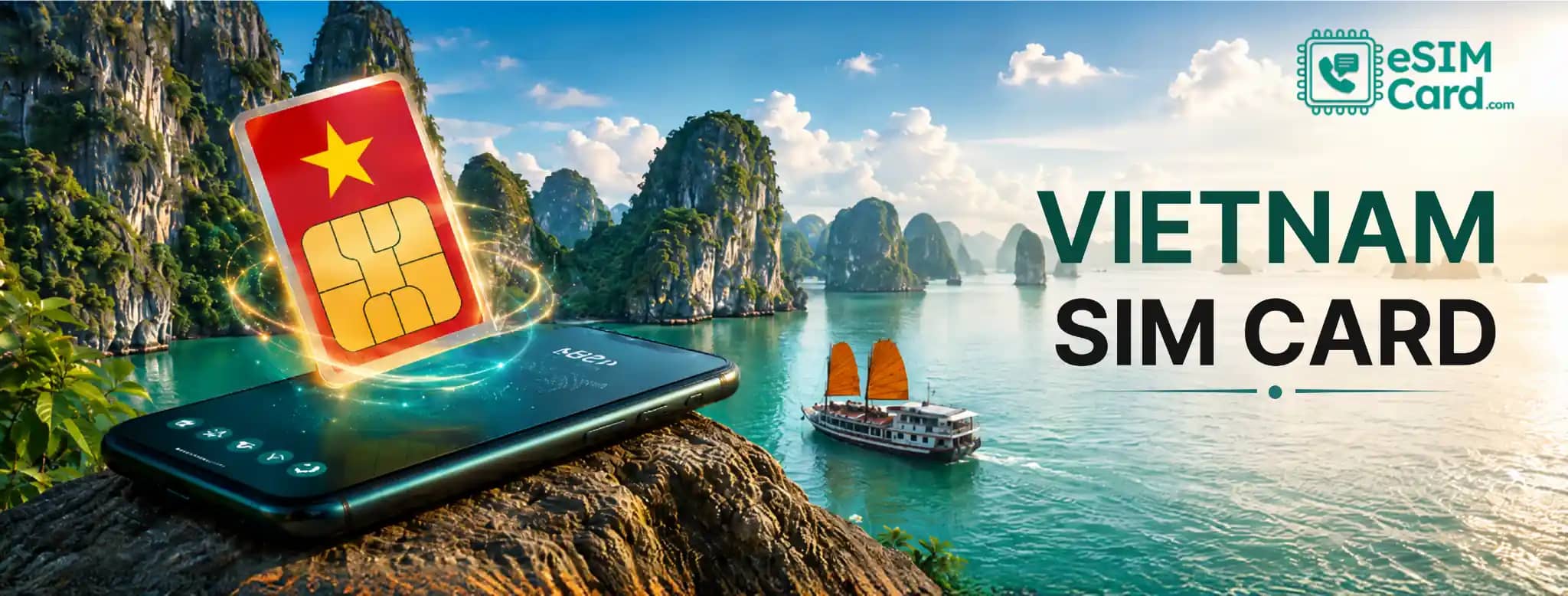
Vietnam SIM Card 2026: Prices, Networks & Tourist Guide
You’ve just landed in Vietnam. You need a Grab to your hotel, Google Maps won’t load properly, and airport Wi-Fi keeps dropping out.
That’s usually the moment a local SIM starts looking like a very good idea. Buying a Vietnam SIM card isn’t difficult.
Tourists can find prepaid SIMs at major airports, official mobile stores and authorised retailers across the country.
The bigger question is which one to buy. Viettel, VinaPhone and MobiFone are the main operators you’ll come across. Each offers different prepaid packages, coverage and validity periods.
Your trip matters too. Someone spending five days in Ho Chi Minh City doesn’t have the same needs as a backpacker travelling through Sapa, Ha Giang and smaller towns.
So before buying the first SIM you see at arrivals, check the network, data allowance, validity and whether the package includes a Vietnamese phone number.
4.9

Highly Rated
Based on 500,000+ customer reviews

Trusted worldwide
Over 1 million travelers across the globe have trusted us

Travel Friendly
No swaps, global connectivity ensured
What Is the Best SIM Card for Tourists in Vietnam?
There isn’t one Vietnam SIM card that works best for every traveller. For most tourists, the choice comes down to Viettel, VinaPhone or MobiFone.
All three serve major cities and tourist areas, but coverage can feel different once you move away from urban centres.
If your trip stays around Hanoi, Ho Chi Minh City or Da Nang, you’ll have several good options.
Heading into northern mountain areas or travelling through multiple provinces? Network coverage deserves more attention than the amount of data printed on the package.
A 20GB package isn’t much use if the network struggles where you’re staying. Start with coverage. Then compare price and data.
Still planning the trip itself? Our guide to the best time to visit Vietnam covers weather, tourist seasons and regional travel conditions.
Viettel vs VinaPhone vs MobiFone: Which Network Should You Pick?
Most tourists end up comparing these three operators. They all offer prepaid mobile services, but each one may suit a different type of trip.
Viettel
Viettel is one of the first networks many travellers look at, especially when their plans go beyond the biggest cities.
It offers prepaid mobile service and supports modern 4G and 5G connectivity on compatible plans and devices.
If you’re travelling through several provinces, Viettel is worth checking first. Still, don’t rely on a general claim that one network works everywhere. Look at coverage for the actual places on your route.
VinaPhone
VinaPhone is another major Vietnamese operator and a practical choice for tourists visiting established destinations. You’ll commonly see it in places such as Hanoi, Ho Chi Minh City and Da Nang.
For a city-focused trip, VinaPhone can be just as relevant as Viettel. Compare the current tourist package, validity and included data before deciding.
VinaPhone 5G is also available across major areas of Vietnam, although your actual connection still depends on location and device support.
MobiFone
MobiFone also serves both local customers and international visitors. Its prepaid and tourist options can include mobile data, local calls or other services depending on the package.
For travellers spending most of their time in cities and popular tourist areas, it’s another network worth comparing.
Vietnamobile
Vietnamobile sometimes appears when travellers search for cheaper prepaid SIM options. The price may look attractive, but coverage should come first.
If your route includes islands, rural areas or mountain regions, check the network in those places before buying.
A speed test from downtown Hanoi won’t tell you what reception will be like on a road outside Ha Giang. Location changes everything.
How Much Does a Vietnam SIM Card Cost?
The price of a Vietnam SIM card depends on what you’re buying. A small prepaid package for a short city break will usually cost less than a larger plan meant for several weeks of travel.
Price can change based on:
- Data allowance
- Plan validity
- Calls and SMS
- 4G or 5G access
- Tourist package extras
- Where the SIM is purchased
Airport packages can also be priced differently from offers available at official stores in the city. That doesn’t automatically make airport SIMs a bad deal.
You’re often paying for convenience. You land, register the SIM and leave the airport already connected.
For many travellers, that’s worth a little extra. But compare what you’re getting. A cheap package with only a few days of validity may become expensive if you need to buy another one halfway through the trip.
Where Can You Buy a SIM Card in Vietnam?
Tourists can buy prepaid SIM cards at airports, official carrier shops and authorised retailers.
Major arrival points include:
- Noi Bai International Airport in Hanoi
- Tan Son Nhat International Airport in Ho Chi Minh City
- Da Nang International Airport
Airport counters are the easiest option for many first-time visitors. You can usually sort out your SIM before ordering a ride or looking for your hotel.
Official carrier stores can be better if you aren’t in a rush. Staff may have more package options available, and you’ll have time to compare data, calls and validity.
Be careful with SIM cards that are already activated under someone else’s identity. A properly registered local SIM is the safer choice.
Do Tourists Need a Passport to Buy a Vietnam SIM Card?
Yes, Foreign visitors registering a local Vietnamese SIM may need to provide a valid passport as part of the subscriber verification process.
Local mobile subscriptions are linked to subscriber information. That means the seller may need your passport details before activating the SIM in your name.
Keep your passport with you when buying from:
- Airport mobile counters
- Viettel stores
- VinaPhone stores
- MobiFone stores
- Authorised telecom retailers
The process usually doesn’t take long. What matters is that the SIM is registered correctly. A badly registered or pre-activated SIM may create problems later if the network asks for subscriber verification.
Does a Vietnam SIM Card Give You a Local Phone Number?
Most local prepaid SIM cards include a Vietnamese phone number. Vietnam uses the country code +84.
A local number can be useful if you plan to make regular calls inside Vietnam or need traditional SMS.
It can also help with:
- Calling hotels or local businesses
- Receiving local SMS
- Making domestic calls
- Longer stays
- Some local account verification
But not every tourist needs one. If most of your communication happens through WhatsApp, Zalo or Messenger, mobile data may be more useful than a new phone number. That’s why it helps to decide what you actually need before buying.
Can Tourists Use 4G and 5G in Vietnam?
Yes. Vietnam’s main mobile networks provide 4G, while 5G is available on supported networks, plans, locations and phones.
That last part matters. Buying a SIM from a 5G network doesn’t mean your phone will show 5G everywhere.
Your device needs to support the required bands. The plan must also allow 5G, and the network needs coverage where you’re standing.
For everyday travel, 4G is usually enough. Google Maps, Grab, social media, browsing and most video calls work comfortably on a stable 4G connection. If 5G is important to you, check the exact tourist package before paying.
How Much Mobile Data Do You Need in Vietnam?
Most travellers don’t need unlimited data. But it depends heavily on what you do with your phone.
Maps, messages and Grab use relatively little. TikTok, YouTube, video calls and hotspot use can eat through a package surprisingly fast.
For a more detailed estimate, our guide to travel data needs explains how maps, social media, streaming and video calls affect your allowance.
These are practical estimates, not fixed rules. Your actual use may be higher or lower. One easy trick is downloading offline Google Maps before leaving your hotel Wi-Fi.
Save large app updates, video downloads and cloud backups for Wi-Fi too. That leaves your mobile data for the things you actually need while moving around.
How Do You Top Up a Vietnam SIM Card?
Running low on data doesn’t always mean you need a new SIM. Most prepaid services can be topped up or renewed.
Depending on the operator, you may be able to add credit through:
- Carrier apps
- Official mobile stores
- Recharge vouchers
- Authorised retailers
- Supported online payment methods
The process differs between Viettel, VinaPhone and MobiFone. Ask about top-ups when you buy the SIM.
Some tourist packages are designed for short stays and may have different renewal rules from standard prepaid packages.
Also check whether adding credit automatically renews your data package. Sometimes you need to select and activate another bundle separately.
What Should You Check Before Buying a Vietnam SIM Card?
A few checks can save you from standing outside the airport wondering why nothing works.
Start with your phone. It should be carrier-unlocked. If your device is locked to your home network, a Vietnamese SIM may not work.
Most modern phones use nano-SIM cards, but checking beforehand takes seconds. Then look at the package itself.
Check:
- Network operator
- Data allowance
- Validity period
- Calls and SMS
- Local phone number
- 4G or 5G access
- Hotspot rules
- Top-up options
If the SIM activates but mobile data doesn’t work, restart your phone first. Still nothing?
Check whether mobile data is turned on and confirm the carrier’s APN or network-selection settings.
What About Using an eSIM in Vietnam?
A physical Vietnam SIM card isn’t your only option. If your phone supports eSIM, you can install a digital mobile plan without removing your regular SIM.
This can be handy when you want data ready as soon as you land. Instead of visiting a shop, you install the eSIM before your trip and switch it on when needed.
Our Vietnam eSIM guide explains the available options, plan types and what to consider before choosing one. An eSIMCard is a best option for visitors.
For many tourists, an eSIM is mainly useful for:
- Google Maps
- Grab
- Google Translate
- Browsing
- Social media
- App-based calling
There is one big difference to keep in mind. Many travel eSIMs are data-only. That means they may not include a Vietnamese +84 phone number, traditional calls or SMS.
You can also check our guide to the best travel apps for navigation, flights, accommodation and other useful tools before your Vietnam trip.
Vietnam SIM Card vs eSIM: Which Is Better?
A local Vietnam SIM card is usually better if you need a Vietnamese number, local calls or SMS. A travel eSIM is often easier if you mainly want mobile data.
Think about what happens during your trip. If you’re calling local businesses and staying for several weeks, a local SIM makes sense.
If you mainly need maps, messaging and ride-hailing for a short holiday, the digital option may be easier. Before buying eSIM plan check your mobile is eSIM compatible.
How to Check If Your Phone Is eSIM Compatible
- iPhone: Go to Settings > Cellular/Mobile Data and look for Add eSIM or Add Cellular Plan.
- Android: Go to Settings > Connections/Network & Internet > SIM Manager and look for Add eSIM or Download a SIM.
- You can also dial *#06#. If your phone shows an EID number, it supports eSIM.
What Does eSIMCard Offer for Vietnam?
eSIMCard currently offers a Vietnam eSIM with travel data through MobiFone. The service is data-only, which means it doesn’t include a Vietnamese phone number, traditional voice calls or SMS.
Travellers can choose between fixed-data and unlimited packages. You can install the eSIM before leaving home. The current Vietnam product activates when it first uses data, rather than simply when you install it.
Hotspot is also supported on the current listing. That makes it a practical option for travellers who want internet access without visiting a local SIM counter.
Conclusion
Don’t choose by price alone. Look at your route, trip length and how you’ll actually use your phone.
A local prepaid SIM is the better fit when you need a Vietnamese number, regular calls, SMS or renewable local service.
For city trips, compare Viettel, VinaPhone and MobiFone based on the package available when you arrive.
For rural routes, check current coverage before deciding. And if you only need mobile data, an eSIM is the simpler alternative.
eSIMCard offers Vietnam data plans for travellers who want to get connected without swapping their physical SIM.
FAQs
Can tourists buy a SIM card in Vietnam?
Yes, tourists can buy prepaid SIM cards from major operators, airport counters and authorised stores. A valid passport is normally required for local registration.
What is the best SIM card for tourists in Vietnam?
Viettel, VinaPhone and MobiFone are the main networks worth comparing. The best one depends on your route, data needs and local coverage.
Do I need a passport to buy a Vietnam SIM card?
Yes, tourists should expect to show a valid passport when registering a local Vietnamese SIM card.
Can I buy a SIM card at Hanoi airport?
Yes, SIM cards are commonly available around major international arrival points, including Hanoi. Check the network, data and validity before buying.
How much data do I need in Vietnam?
Around 3 to 7GB per week can suit moderate users. Streaming, video calls or hotspot use can push your data needs much higher.
Does a Vietnam SIM card include a phone number?
Most local Vietnamese prepaid SIM cards include a +84 number. International travel data products may not include a phone number.
Can I use hotspot with a Vietnam SIM card?
It depends on the package. Check tethering rules before buying if you plan to connect a laptop, tablet or another phone.
Is an eSIM better than a SIM card in Vietnam?
An eSIM is easier for quick travel data and keeping your regular SIM installed. A local SIM is better when you need calls, SMS or a Vietnamese number.